Multi-location restaurant POS for India — 6 systems compared
Multi-location restaurant POS systems compared for India — Petpooja, Posist, Limetray, RD POS, Toast, Pine Labs Bharat POS — on consolidation, taxes, sync.
Last updated 9 Aug 2026
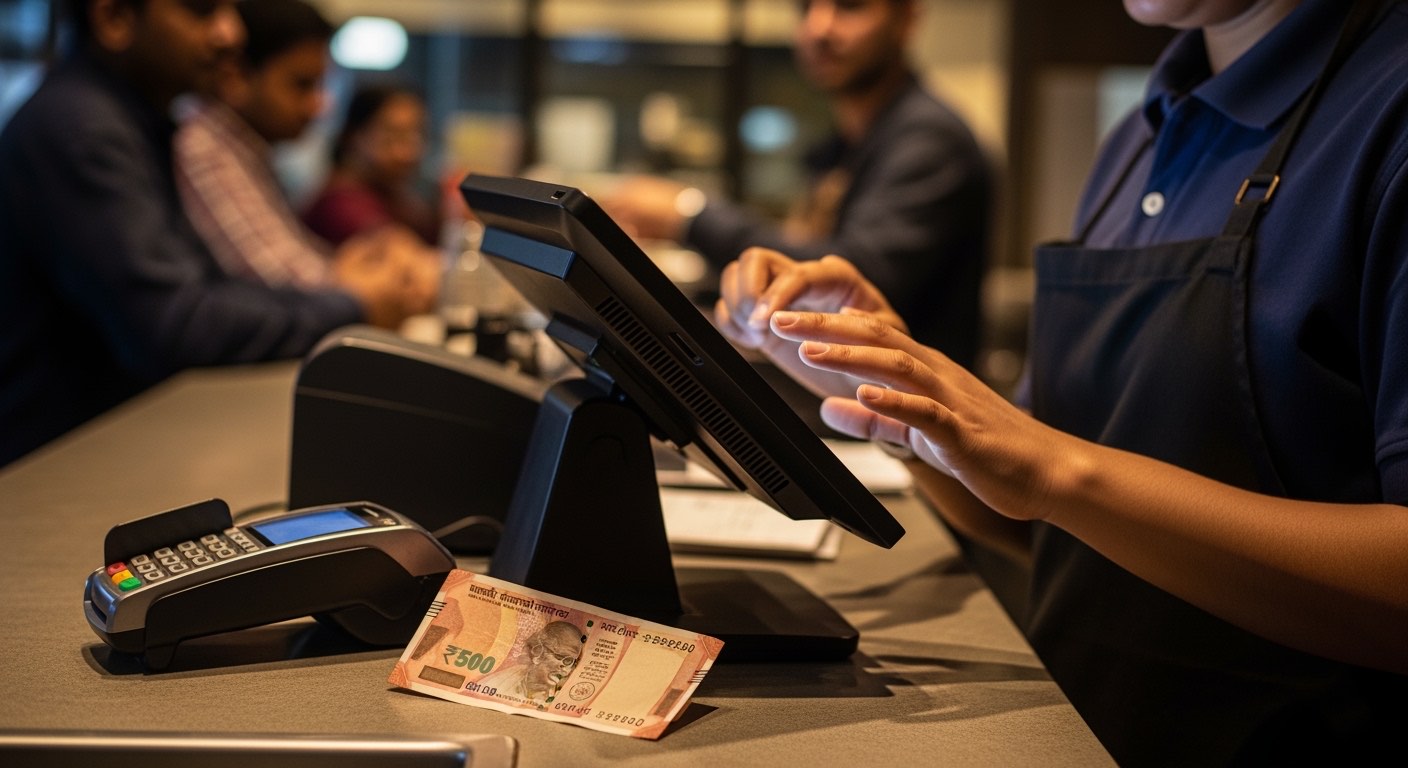
About this piece. A multi-location POS is a different product from a single-outlet POS, even when the brochure looks the same. The differences live in three places: how data syncs from each outlet to a central view, how GST is handled across multiple GSTINs and states, and how a price or menu change pushes from HQ to all outlets without breaking. This is the operator's view of six POS systems shipped in India for chain restaurants. Pricing posture and feature notes based on public material mid-2026 — verify with each vendor.
What "multi-location" really means in a POS
Six structural jobs a POS has to do well to call itself multi-location:
- Real-time or near-real-time sync of sales data from each outlet to a central dashboard
- Per-outlet GSTIN handling — most chains have a separate GSTIN per state, sometimes per outlet
- Centralised menu management — push a price change from HQ to all outlets in one action
- Per-outlet inventory — stock levels per location, with inter-store transfer support
- Centralised reporting — sales, taxes, voids, discounts visible across all outlets
- Resilience to outlet-level internet drops — outlet keeps billing offline, syncs when online
A POS that does (1)-(3) is "multi-outlet ready". A POS that does all six is true multi-location grade.
The six systems compared
| POS | Multi-outlet sync | Per-outlet GSTIN | Centralised menu | Inventory across outlets | Offline billing | Indian-market posture |
|---|---|---|---|---|---|---|
| Petpooja | HQ module (near-real-time) | Yes | Yes | Yes (inventory module) | Yes | Largest install base in India SMB |
| Posist (Restroworks) | Native real-time | Yes | Yes | Yes | Yes | Mid-market and enterprise |
| Limetray | Yes (limited depth) | Yes | Yes | Limited | Yes | Marketing-heavy chains |
| Restaurant Daily POS | Yes (daily sync) | Yes | Yes | Limited (count-based) | Yes | Daily-ops first, POS evolving |
| Toast | Real-time native | Evolving for India | Yes | Yes | Yes | US-led, India growing |
| Pine Labs Bharat POS (restaurant) | Yes | Yes | Limited | Limited | Yes | Payments-first, POS layered |
A few definitions:
- "Real-time" means each transaction visible centrally within seconds; "near-real-time" means within minutes; "daily sync" means end-of-day batch
- "Centralised menu" means a price change at HQ propagates without per-outlet manual entry
- "Offline billing" means the outlet can keep taking orders when internet is down
System-by-system
Petpooja
The default for Indian SMB chains. POS that has the longest list of restaurant-specific features (KOT routing, table management, Swiggy/Zomato integration, captain-level discounts). Multi-outlet via the HQ module. Per-outlet GSTIN supported. Inventory mature. Pricing per outlet plus add-ons; total cost climbs with module count.
Best fit: chains 2-20 outlets where the POS itself has to be solid first, and where the team is already trained on Petpooja from a single-outlet phase.
Posist (Restroworks)
Built for chain ops from inception. Real-time multi-outlet sync, central menu management, strong BI. Used by larger Indian QSR chains and casual-dining brands. Pricing is enterprise-tier; implementation runs into weeks; the feature surface exceeds most 5-outlet operators' needs.
Best fit: chains 10+ outlets, especially expanding across multiple cities, where central operations control matters more than per-outlet customisation.
Limetray
Strong on marketing and loyalty layered on top of POS. POS itself is competent for single and small multi-outlet. Multi-outlet depth on inventory and consolidated P&L is lighter than Petpooja or Posist. CRM and online-ordering integration are the standouts.
Best fit: delivery-heavy chains where customer marketing drives revenue and the POS is one piece of a broader marketing stack.
Restaurant Daily POS
POS layer that sits inside the broader Restaurant Daily ops product. Daily sync, per-outlet GSTIN, central menu push, daily inventory counts. Inventory is count-based rather than transaction-deducting (deliberately — counts are the ground truth, transactions miss spillage and over-portioning). Best paired with the RD daily-ops layer; less mature as a standalone enterprise POS. Note: this is our product — read with that in mind.
Best fit: chains 2-10 outlets that want the POS and the daily ops layer in one tool, accept count-based inventory as a discipline, and are not running 1000+ transactions per outlet per day.
Toast
Mature US POS with a growing India footprint. Real-time multi-outlet, strong reporting, hardware bundled. India localisation (GST, Swiggy/Zomato integration) is improving but not as turnkey as Indian-native systems. USD pricing is a meaningful factor for SMB-scale Indian chains.
Best fit: Indian chains with US founder/funder backgrounds where Toast familiarity is already in the team, and where the brand operates in markets that overlap.
Pine Labs Bharat POS (restaurant variant)
Payments-first product (Pine Labs is best known as a payment-acceptance leader in India), with a POS layer added. Strong on payment acceptance and reconciliation; lighter on restaurant-specific KOT, menu engineering, multi-outlet inventory. Good for chains where payment-side ops dominate the POS conversation.
Best fit: chains with very high transaction volume per outlet where the payment terminal is the centrepiece; less suitable as the primary POS for menu-heavy operations.
The GST handling question
Multi-state chains carry separate GSTINs per state. The POS must handle this without becoming a per-outlet manual exercise. Three things to verify with any vendor:
- Outlet-to-GSTIN mapping — each outlet tied to its state GSTIN; invoices print correctly
- Tax rate per item per outlet — restaurants sometimes carry 5% (composition / non-AC) and 18% (AC, alcohol-served) outlets in the same chain
- GSTR-1 export per GSTIN — clean export so the CA can file per state without manual reconciliation
A POS that requires manual rate entry per outlet for every menu item is a multi-outlet POS in name only.
The menu push question
Menu changes happen frequently in chain restaurants — seasonal items, price revisions, festival specials, regional variants. The POS must support:
- Push from HQ to selected outlets (not all-or-nothing)
- Schedule a push (e.g. midnight rollover for festival menu)
- Per-outlet override (Outlet 4 keeps an item Outlet 5 drops)
- Audit trail of who changed what when
Petpooja, Posist, Limetray, RD all handle the basics. Audit trail depth varies. The audit trail matters when you have an area manager doing the push and you want to know which outlet went out of brand spec.
Pricing posture in plain numbers
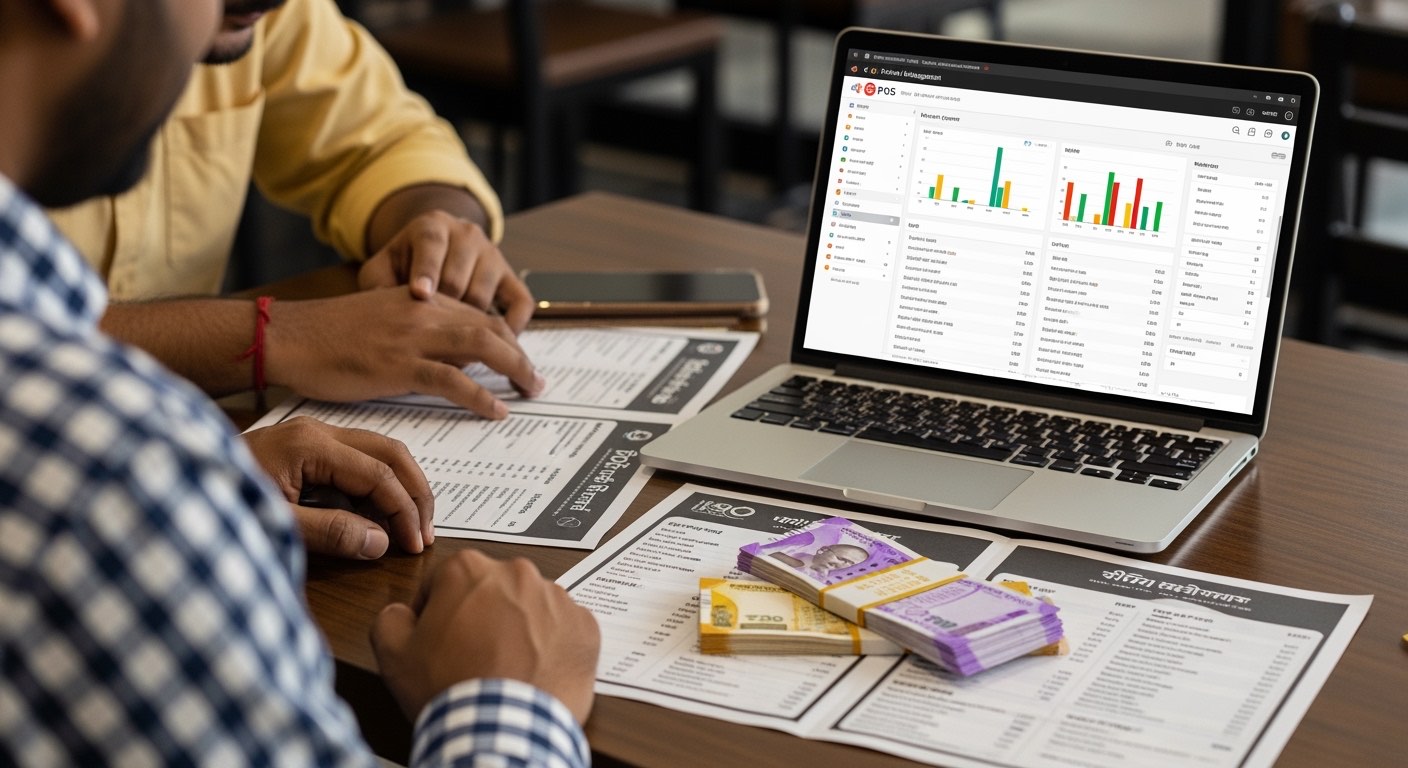
Indicative monthly pricing per outlet (verify directly):
| POS | Per-outlet/month (₹) | Setup fee | Hardware |
|---|---|---|---|
| Petpooja | 1,500-3,500 + add-ons | One-time setup | Sold separately |
| Posist | 5,000-15,000 (enterprise quotes) | Implementation cycle | Bundled or separate |
| Limetray | 2,000-5,000 + marketing modules | One-time | Sold separately |
| Restaurant Daily | 1,500-3,000 (no separate setup) | None | BYO Android tablet |
| Toast | USD-priced; ₹6,000-12,000 equivalent | Implementation | Bundled |
| Pine Labs Bharat | 1,000-2,500 + payment MDR | Low | Payment terminal as POS |
For a 5-outlet chain, total monthly POS spend ranges roughly ₹7,500 (lean Petpooja) to ₹75,000 (Posist enterprise). The right number depends on what the POS has to do versus what the daily-ops layer or the CA handles.
What to verify in a multi-outlet POS demo
A 30-minute demo is enough to surface the structural issues. Ask the vendor to show you:
- A live menu price change pushed from HQ to two outlets, in front of you
- A sales report rolled up across two outlets, with per-outlet drill-down
- An invoice generated for an outlet in State A and one in State B, with the correct GSTINs
- The screen the cashier sees when internet drops — does billing continue?
- The audit log of who made the last 10 changes to the menu
If any of the five is "we will set it up next week and show you", the structural depth is not where the brochure says it is.
Where this fits in the multi-outlet stack
- POS comparison — picking the transaction layer (this piece)
- Chain ops software comparison — the broader operations layer (sibling)
- Multi-outlet management — the operating model (hub)
- Inter-store transfer — the document the POS inventory module should support
The POS is one tool in a larger stack. The right pick is the one that fits the stack, not the most features in isolation.
Related on Restaurant Daily
One operator playbook a week, in your inbox.
Cash close, petty cash, payroll, compliance, unit economics — sent every Monday morning. No spam, no upsell drip. Unsubscribe in one click.
Sent from noreply@restaurantdaily.ai. We never share your address.
Related reading
Restaurant chain operations software — 5 tools compared on multi-outlet roll-ups
Restaurant chain operations software compared — 5 tools (Petpooja, Posist, Limetray, RD multi-outlet, Toast) on roll-ups, consolidated reporting, multi-outlet workflow.
Inter-store transfer format for restaurants — IST template + GST handling
Inter-store transfer format for restaurants in India — free IST template, GST handling for stock movement between outlets, and the audit trail that protects you.
How to manage multiple restaurant outlets — a week-by-week operating rhythm
How to manage multiple restaurant outlets — the area manager's week-by-week operating rhythm, daily/weekly/monthly cadence, and the four habits that keep quality even.
Multi-outlet restaurant management in India — what changes between 1 and 5
Multi-outlet restaurant management in India — what changes between 1 outlet and 5, the four operating phases, role structure, and the cost of getting it wrong.
Franchise restaurant audit checklist — free 60-point template (India)
Franchise restaurant audit checklist for India — a free 60-point template covering brand, ops, finance, compliance, and customer signals for franchisor reviews.