Cloud kitchen vs dine-in restaurant in India — capex, ops, exit
Cloud kitchen vs dine-in restaurant in India compared on capex, ops cycle, margin structure, brand value, exit. Operator-grade decision framework for first-time owners.
Last updated 9 Aug 2026
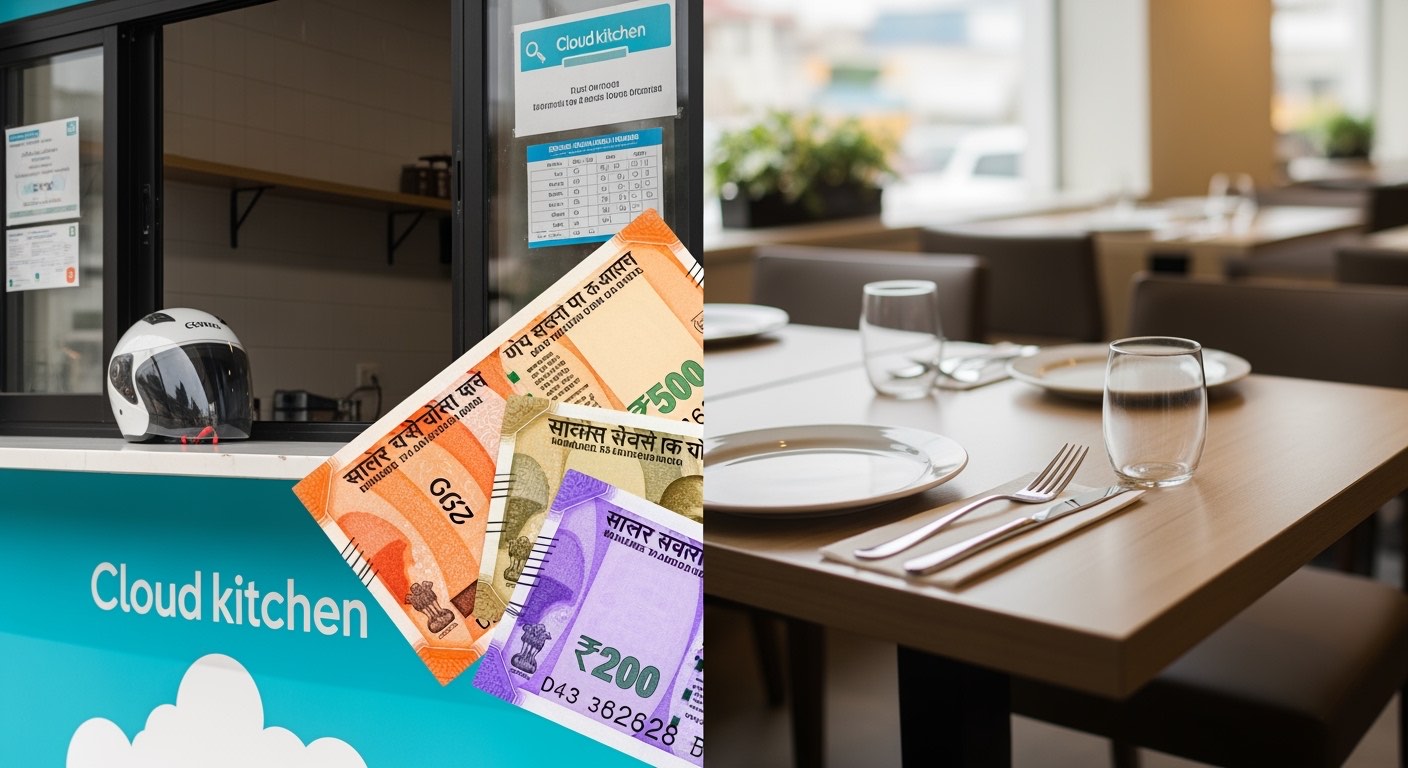
About this piece. "Cloud kitchen — lower capex, faster payback" was true in 2018, was reasonable in 2021, and is partially true in 2026. Aggregator commission compression, brand discoverability cost, and the rise of multi-brand cloud-kitchen aggregators have reshaped the maths. This piece compares the two formats honestly on the five dimensions that matter — capex, ops cycle, unit economics, brand asset value, and exit — and tells you which is the right call for which operator profile.

What each format actually is in 2026 India
Before comparing, terms:
- Cloud kitchen — kitchen-only, delivery-only, no FOH. Single brand or multi-brand from one kitchen. Order flow is 90%+ from Swiggy and Zomato; 5–10% from direct (Dukaan / WhatsApp / brand site).
- Dine-in restaurant — kitchen + FOH, customers seat themselves or get seated. Most have a delivery channel too (typically 25–40% of revenue), but the asset is the dine-in.
The hybrid — dine-in with substantial delivery — is where most independent restaurants in India sit by year 2. The interesting comparison is the purebred end of each spectrum.
Capex — cloud kitchen wins by ~60%
A like-for-like comparison: 50 covers of dine-in vs a cloud kitchen designed for the same throughput (roughly 80–120 deliveries / day at peak).
| Capex line | Cloud kitchen (₹L) | 50-cover dine-in (₹L) |
|---|---|---|
| Security deposit | 2–4 | 6–18 |
| Civil + design | 1.5–3 | 5.5–12 |
| Electrical + HVAC | 2–4 | 7–14 |
| Kitchen equipment | 8–15 | 12–22 |
| FOH furniture | 0 | 3–7 |
| FOH lighting + ambience | 0 | 1.5–3.5 |
| Smallware | 0.8–1.5 (delivery packaging only) | 1.5–3 |
| POS + KOT | 0.4–0.8 | 0.6–1.5 |
| Signage | 0.3–0.8 | 1–3 |
| Marketing launch | 0.5–1.5 | 1–3 |
| Total capex | 15.5–33.6 | 42–96 |
Cloud kitchen capex lands roughly 35–40% of the dine-in number. The deposits are smaller, no FOH, no signage at street scale, no ambience spend. That's the upfront story.
Pre-opening time — cloud kitchen wins by ~40%
Cloud kitchen launches in 45–60 days post-lease. Dine-in launches in 75–110 days. The faster timeline saves 1.5–2 months of rent + pre-opening salaries — roughly ₹2–4L of pre-opening opex.
Faster launch is also a survival advantage. The cloud kitchen operator can pivot menu, pricing, brand identity in 2 weeks if month-1 data demands it. The dine-in operator is locked into menu cards, table layout, signage that take months to redo.
Operating cost structure — the picture inverts
Capex is the headline number. Monthly opex is where the comparison gets interesting.
| Monthly opex | Cloud kitchen | 50-cover dine-in |
|---|---|---|
| Rent + CAM | 60,000 | 1,80,000 |
| Salaries + benefits | 1,40,000 (8 staff) | 2,80,000 (16 staff) |
| Utilities | 30,000 | 60,000 |
| Aggregator commission | 1,30,000–1,70,000 (24–28% of delivery revenue) | 50,000–70,000 (24–28% of delivery share) |
| Direct marketing | 80,000 (mandatory for discoverability) | 50,000 |
| Software + POS subs | 12,000 | 15,000 |
| Repairs + misc | 25,000 | 50,000 |
| Cash opex (excl. COGS) | 4,77,000–5,17,000 | 6,85,000–7,05,000 |
Cloud kitchen cash opex is 25–30% lower than dine-in. But the aggregator commission line item is the swing factor — and it's a percentage, not a fixed cost. As cloud-kitchen revenue grows, commission grows linearly; dine-in commission grows only on the delivery slice.
Unit economics — the honest comparison
Same revenue level (₹15L/month gross), same operator skill:
| Metric | Cloud kitchen | 50-cover dine-in |
|---|---|---|
| Gross revenue | 15,00,000 | 15,00,000 |
| Net realisation (after commission) | 11,00,000–11,40,000 | 13,40,000–13,60,000 |
| Food cost | 5,00,000 (33%) | 4,80,000 (32%) |
| Labour | 1,40,000 (9%) | 2,80,000 (19%) |
| Rent + utilities | 90,000 (6%) | 2,40,000 (16%) |
| Marketing | 80,000 (5%) | 50,000 (3%) |
| Other opex | 50,000 (3%) | 80,000 (5%) |
| Operating profit | 2,40,000–2,80,000 (16–19%) | 2,10,000–2,30,000 (14–15%) |
Cloud kitchen operating margin edges out dine-in at the same revenue, despite lower net realisation, because the cost base is lower. The catch — cloud kitchen revenue per outlet typically caps lower than a healthy dine-in. Most single-brand cloud kitchens in India plateau at ₹10–18L/month; a healthy dine-in scales to ₹25–45L/month at the same kitchen footprint with FOH revenue layered on.
The discoverability cost nobody books
Cloud kitchens don't have walk-in footfall. Every order has to be earned on the aggregator search results page. That earnings cost — discount funding, ad spend on Swiggy/Zomato, listing tier upgrades — sits at 8–15% of net revenue for a healthy cloud kitchen, vs 2–5% for a dine-in operating off catchment footfall.
That's the hidden line item. Operators who plan a cloud kitchen at "5% marketing budget" routinely find themselves spending 12% in month 4 just to stay visible. Build it into the unit economics from day one.
Brand asset value at month 36 — dine-in wins
This is the dimension the cloud-kitchen excitement of 2018–21 underweighted. At month 36:
- A successful dine-in is a recognisable place. People know the address, the look, the menu. Secondary market value: 1.5–3x EBITDA.
- A successful cloud kitchen is an aggregator listing with reviews. Move the kitchen, the listing's geo-tag changes, half the reviews stop being relevant. Secondary market value: 0.5–1.2x EBITDA, and only sometimes saleable.
The brand-asset gap is why investor-grade restaurant capital still favours dine-in over cloud kitchen in India, even when cloud-kitchen unit economics are better at scale. The asset you build matters separately from the cash it throws off.
When cloud kitchen is the right call
- Capital-tight first-time operator. ₹20L corpus, wants to test a menu, doesn't have ₹70L for dine-in.
- Multi-brand experimenter. Want to run 4 brands from one kitchen, test which scales. Cloud kitchen is the only structure where this is feasible.
- Existing dine-in operator scaling delivery. Open a satellite cloud kitchen 5km away to extend delivery radius without doubling rent.
- Capacity-led brands. Rajma chawal, biryani, momos — formats where dine-in margin doesn't beat delivery margin and the customer doesn't want a dining experience.
When dine-in is the right call
- Brand-builder operator. You want a place, not a kitchen. The asset value matters more than the operating margin.
- Tier-2 city operator. Aggregator coverage is patchy in tier-2; dine-in catches the catchment that delivery doesn't reach.
- Liquor-format brand. Dine-in is the only path; delivery-only liquor is regulatorily stuck.
- Cuisine where presentation is the experience. Fine-dine, omakase, regional speciality — formats that lose 60% of their value in a delivery box.
A 5-question filter
Answer these honestly, the route reveals itself.
- Is your launch corpus above or below ₹40L? Below = cloud kitchen.
- Are you optimising for cash-on-cash return or for asset value? Cash = cloud kitchen. Asset = dine-in.
- Does your menu present well in a delivery box? No = dine-in.
- Is your catchment delivery-saturated or delivery-thin? Saturated = dine-in differentiates. Thin = cloud kitchen captures the delivery wedge.
- Are you on-site full-time or hiring a manager? On-site = either works. Manager = dine-in is harder to absent-manage.
Related on Restaurant Daily
One operator playbook a week, in your inbox.
Cash close, petty cash, payroll, compliance, unit economics — sent every Monday morning. No spam, no upsell drip. Unsubscribe in one click.
Sent from noreply@restaurantdaily.ai. We never share your address.
Related reading
Soft launch vs grand opening for restaurants in India — sequencing
Soft launch vs grand opening for restaurants in India — sequencing, media plan, when to switch. Operator-grade playbook covering the 21 days from quiet open to full visibility.
Food trial run before restaurant launch — friends & family protocol
Food trial run before restaurant launch in India — friends-and-family menu testing protocol, scoresheets, and what to actually fix between session 1 and opening night.
Small restaurant business plan India — free template for bank loan
Small restaurant business plan India — free template for bank loan + investor decks. 12-section structure with the numbers loan officers actually look at.
Equipment list for a new Indian restaurant — kitchen + FOH BOM
Equipment list for a new Indian restaurant — full kitchen + FOH bill of materials with vendor categories and indicative prices for a 50-cover casual dining.
Restaurant location scouting checklist for India — what to test
Restaurant location scouting checklist for India — footfall, F&B density, parking, hood/exhaust feasibility, lease pitfalls. The 38-item operator-grade test.