Petpooja review (2026) — honest operator-side verdict
Petpooja review (2026) — honest operator-side verdict on POS, KOT, billing, integrations, support, and pricing. Who Petpooja fits, who it doesn't.
Last updated 9 Aug 2026
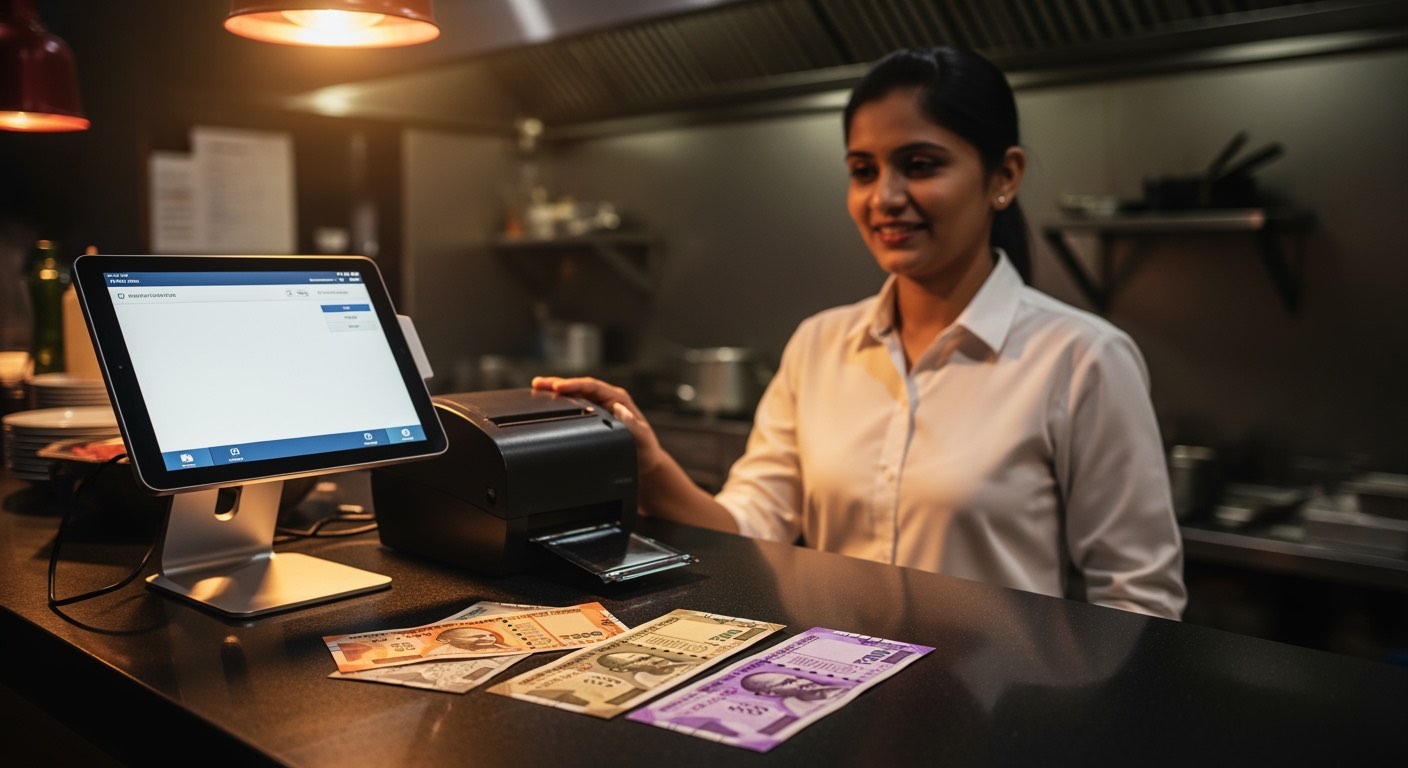
About this piece. Petpooja is the most-installed restaurant POS in India. That's not a value judgement — it's a market fact. This piece is the honest operator-side review, drawn from operator interviews across NCR, BLR, and MUM and from public product disclosures. Pricing in this piece is what the vendor publicly lists; verify on the Petpooja site before signing. We've used the brand and recommend it for the right operator profile, and don't for the wrong one — both are spelled out below.
Verdict (top of page)
Petpooja is the right call for: a single-outlet to small-chain restaurant in India that wants a battle-tested POS + KOT + billing stack with strong aggregator integrations and a wide installed base of integration partners. The product works, the support is reachable, the ecosystem is the strongest in the category.
Petpooja is not the right call for: an operator who needs deep daily-close UX, multi-outlet rollups out of the box, or a free tier to get started. The product is POS-first and works best when you treat it as the till + kitchen + aggregator orchestration layer, not the daily-ops cockpit.
Headline rating (operator-side, not vendor-influenced):
| Dimension | Score 1–5 | Notes |
|---|---|---|
| POS + billing | 4.5 | Stable, feature-complete |
| KOT + kitchen ops | 4 | Solid, screen + printer flows work |
| Aggregator integration | 4.5 | Strongest in India |
| Inventory + recipe | 3.5 | Functional, learning curve |
| Reports + analytics | 3.5 | Many reports, not opinionated |
| Multi-outlet rollups | 3 | Possible, not seamless |
| Support quality | 4 | Reachable, language coverage |
| Pricing transparency | 3.5 | Listed, but add-ons add up |
| Overall | 4 / 5 | Strong default for the right operator |
What Petpooja actually is
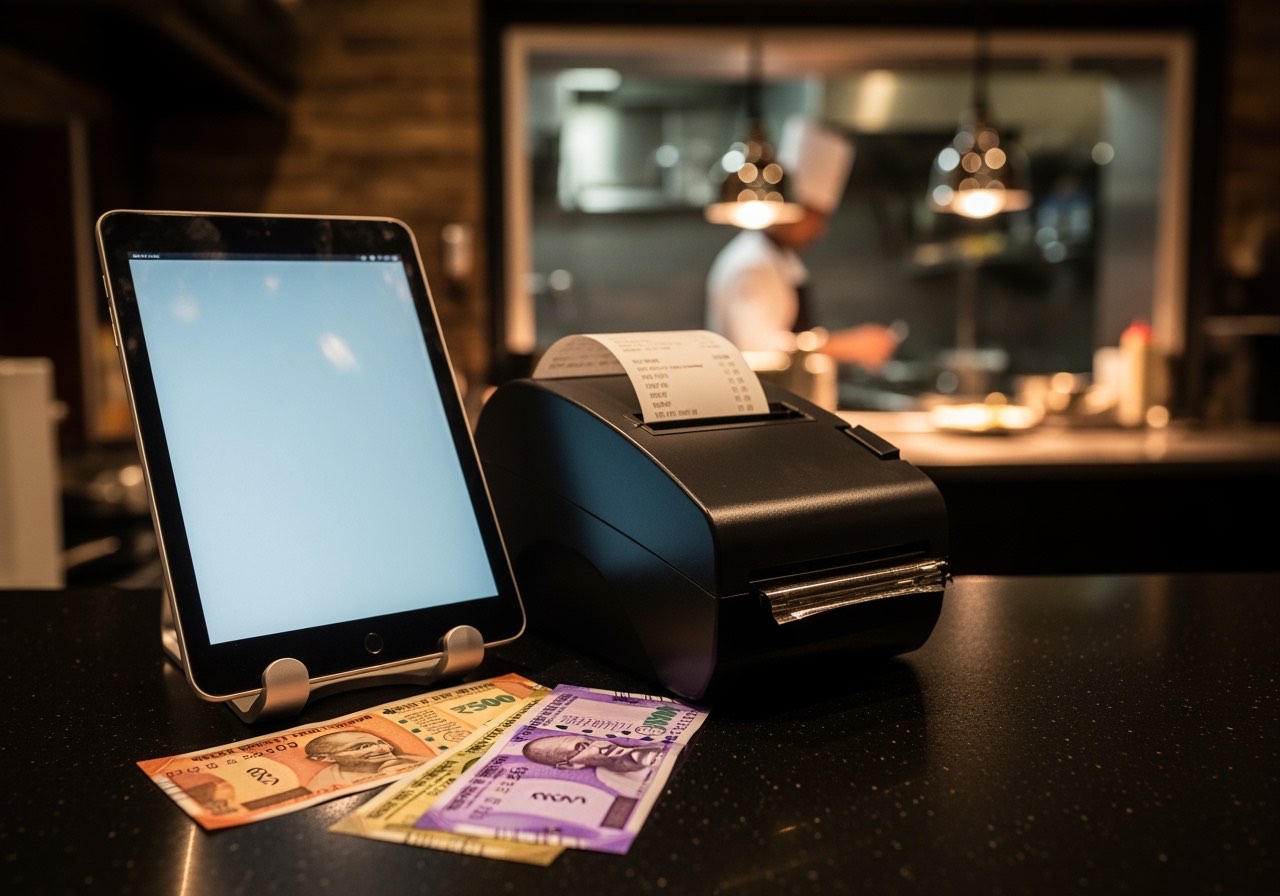
Petpooja is a cloud + on-premise POS billing system with extended modules for KOT, inventory, recipe management, customer relationship management, and aggregator integration. It runs on a wide range of POS hardware — most commonly an Android tablet at the counter with a thermal bill printer and a separate kitchen KOT printer.
The product's centre of gravity is billing + aggregator orchestration. That's where it's deepest, that's where the install base is densest, and that's where it competes most strongly against alternatives (Posist, Limetray, Toast for India, RD POS, smaller regional tools).
What it does well — section by section
POS + billing
Stable. Bill prints reliably. Multiple bill formats (KOT-then-bill, dine-in, parcel, takeaway, delivery). Tax handling for the dual GST rate (5% non-AC, 5% with-AC, 18% liquor) is correct out of the box. Split bills, item-level discounts, manager-approval flows for void / discount above threshold — all there.
Aggregator integration
The single strongest reason to pick Petpooja in India 2026. Native Swiggy + Zomato integration. Order printing to KOT, item-level menu sync, on-off toggling, item-level pause, price sync with platform-specific markup. This integration is mature; it's been refined across a million-plus units.
The alternatives can do this — Posist and Limetray have parity, RD POS has it for India-specific aggregators — but Petpooja's depth and reliability is the standard others are measured against.
KOT + kitchen ops
KOT screen at the kitchen pass works well. Printer + screen combo supported. Item-level prep-time tracking, ticket-age colour coding (green/yellow/red), serve-confirm back to FOH — all functional. Multi-station kitchen (cold pass + hot pass + bar pass) is supported.
Support
Reachable. Phone + chat support during India business hours, with regional language coverage (Hindi, Tamil, Bengali, Marathi, Telugu, Kannada, Malayalam). Severity-1 issues (POS down, billing failing) get answered within minutes during business hours. Severity-3 issues (configuration, training) wait in queue.
Ecosystem
The integration partner network is the widest in India — Swiggy, Zomato, Razorpay, Paytm, Pine Labs, third-party loyalty, third-party CRM, accounting (Tally, Zoho Books). When you need to plug in another tool, the integration usually exists.
Where the gaps show up
Inventory + recipe
Functional but not delightful. Recipe-card setup takes time; the unit-conversion logic (kg vs gm vs piece) needs careful setup or the consumption math drifts. Bulk recipes (gravies, marinades that go into 12 items) are supportable but require operator discipline. The product won't catch your data-entry mistakes for you.
Reports + analytics
Many reports. The product gives you sales by item, hour, day, daypart, payment mode, server, table, KOT-to-bill time. The catch: it gives you the data without taking a position on what matters. An operator who knows what they're looking for can dig out anything; a first-time operator can drown in it. Not opinionated.
Multi-outlet rollups
Possible, but the rollup UX assumes a chain operator with HQ + outlets architecture. A 2-outlet single-owner restaurant has to set up the chain layer before getting cross-outlet visibility. Doable, not seamless.
Daily-close discipline
Petpooja closes the till at end-of-day with a Z-report. Whether the operator runs that through an end-to-end daily-close discipline (cash + UPI + card vs Z-report + petty cash + advances + variance) is on the operator. The product gives you the till-close primitive; the daily-close ritual sits outside it.
If your single biggest operating pain is the daily close and weekly P&L cadence, Petpooja is fine as the till but you'll want a layer above it that runs the daily-ops cockpit. That's where dedicated daily-ops products fit alongside Petpooja, not against it.
Pricing transparency
Petpooja publishes a base subscription price (publicly listed; verify on vendor site) but the realistic monthly cost lands meaningfully above base because of:
- Per-aggregator integration add-on (Swiggy, Zomato individually)
- KOT screen / additional printer add-on
- Multi-user / multi-station add-on
- Premium support tier (faster severity-1 response)
- Hardware purchase or rental
A typical 50-cover casual dining ends up at ₹1,500–₹3,500 / month all-in, depending on add-ons. Still very reasonable for the value, but not the headline number.
Pros / cons (sectioned)
Pros
- The strongest aggregator integration in the Indian market
- Stable billing under load, including peak weekend dinner
- Wide installed base means staff with prior Petpooja experience are easy to hire
- Reachable multi-language support
- Wide third-party integration ecosystem
- POS hardware flexibility (tablet + printer combos at multiple price points)
Cons
- Inventory + recipe modules require operator discipline to keep accurate
- Multi-outlet rollup UX assumes chain architecture
- Reports are comprehensive but not opinionated — first-time operators can drown
- Daily-close ritual sits outside the product
- All-in pricing is meaningfully above the headline subscription price
- UI density is high — new staff training takes 4–6 hours of structured walkthrough
Who it's for
- Single-outlet casual dining or QSR with 25%+ aggregator-driven revenue — the integration depth pays for itself.
- Owner-managed outlet with a willing tech-comfortable operator — gets the most out of the breadth of features.
- Small chain (2–5 outlets) running the same brand — chain layer makes sense at this scale.
- Outlets in India where post-sales support in regional language matters — Petpooja's coverage is wider than most alternatives.
Who it isn't for
- First-time operator with low tech-comfort and no operations manager — the breadth is overwhelming. A simpler tool will be used more.
- Operator whose primary pain is daily-close discipline + weekly P&L cadence — Petpooja is a till, not a cockpit. Pair it or pick differently.
- Multi-format operator running 5 different brand identities from one kitchen — chain-of-brands architecture is awkward to model.
- Operator looking for free / freemium to test — Petpooja is paid from day one. There are free alternatives if budget is the deciding constraint.
- Heavy quick-service kiosk format with extreme transaction volume — at very high TPS the alternatives (specifically chain-grade tools) sometimes pull ahead.

How it compares to common alternatives
A short, fair comparison on the dimensions operators actually care about:
| Dimension | Petpooja | Posist | Limetray | RD POS / Restaurant Daily |
|---|---|---|---|---|
| Install base in India | Largest | Mid (chain-skewed) | Mid | Newer |
| Aggregator integration | Strongest | Strong | Strong | Functional |
| Single-outlet UX | Strong | Mid | Mid | Strong |
| Multi-outlet rollup | Possible, chain-style | Strong (chain-native) | Strong | Strong (designed for it) |
| Daily-close discipline | Outside product | Outside product | Outside product | Built-in |
| Free tier | No | No | No | Yes |
| Support languages | Wide | Mid | Mid | Mid (growing) |
Each tool is best at slightly different things. Petpooja's edge is depth of ecosystem; Posist's edge is chain operations; RD POS / Restaurant Daily's edge is daily-close UX and free entry. The honest answer to "which is best?" is "for which operator and which problem?"
Final operator-side verdict
If you're running a single-outlet or small-chain Indian restaurant with non-trivial aggregator volume and you want the safest, widest-supported POS choice, Petpooja is the responsible default. Buy it with eyes open on the all-in pricing and on the daily-close gap. It is not a daily-ops cockpit — it's a strong till and aggregator orchestrator. Pair it with a daily-close ritual you actually run, whether that's a notebook, a Sheet, or a dedicated daily-ops tool.
For a fuller side-by-side comparison from the operator side, see our companion piece: Restaurant Daily vs Petpooja.
Related on Restaurant Daily
One operator playbook a week, in your inbox.
Cash close, petty cash, payroll, compliance, unit economics — sent every Monday morning. No spam, no upsell drip. Unsubscribe in one click.
Sent from noreply@restaurantdaily.ai. We never share your address.
Related reading
Dukaan vs Petpooja menu app for restaurants — direct ordering vs full POS
Honest comparison of Dukaan and Petpooja for Indian restaurants — direct WhatsApp/web ordering vs full POS, when each makes sense, and how some operators use both.
Razorpay POS vs Paytm POS for restaurants — MDR, settlements, hardware
Razorpay POS vs Paytm POS for Indian restaurants — MDR rates, settlement cycles, hardware, dispute handling, and which payment terminal fits which outlet shape.
Restaurant Daily vs Petpooja — feature-by-feature comparison (2026)
An honest side-by-side of Restaurant Daily and Petpooja for single-outlet and multi-outlet Indian restaurants — POS, daily close, integrations, and who picks which.
Best POS software for small restaurants in India — 5 picks compared (2026)
Petpooja, Posist, Limetray, Toast, and Restaurant Daily POS compared for small Indian restaurants — features, pricing posture, hardware fit, and who each is built for.
रेस्टोरेंट के लिए सबसे अच्छी ऐप — 5 options का Hindi review (2026)
Petpooja, Khatabook, Restaurant Daily, Vyapar, Pine Labs — हर ऐप का use-case, price, और किसके लिए सही है, हिंदी में detailed comparison।