Razorpay POS vs Paytm POS for restaurants — MDR, settlements, hardware
Razorpay POS vs Paytm POS for Indian restaurants — MDR rates, settlement cycles, hardware, dispute handling, and which payment terminal fits which outlet shape.
Last updated 9 Aug 2026
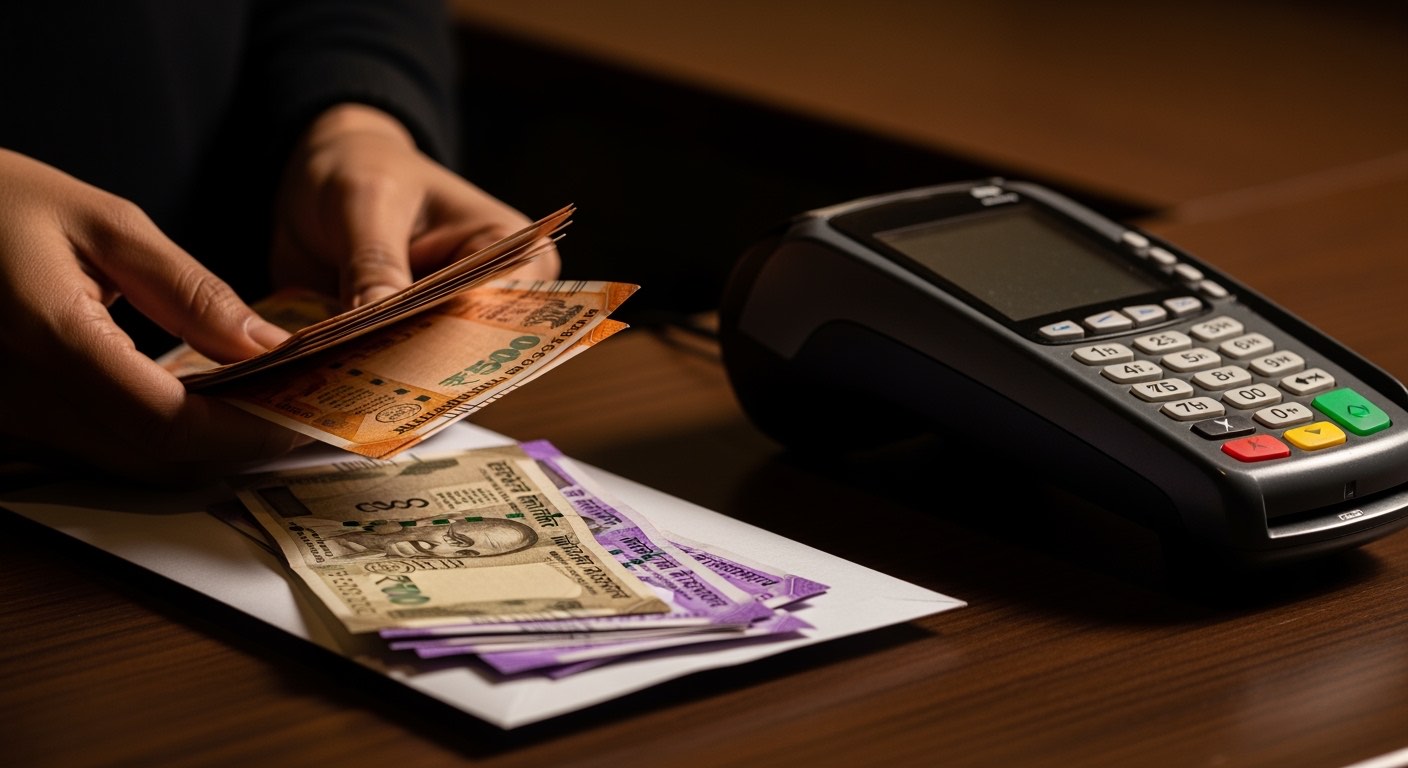
Verdict in one paragraph
For most Indian restaurants in 2026, Paytm POS wins on distribution and immediate-settlement options (often T+0 / T+1) while Razorpay POS wins on developer integrations, dispute handling clarity, and dashboard polish. Both run on similar Android-based payment terminals, both accept UPI / cards / wallets, both charge MDR in the same general band. Pick by the constraint that matters most to your outlet: same-day cash flow (Paytm POS) or clean integrations with your billing/accounting stack (Razorpay POS). Below is the honest side-by-side.
What we mean by "POS" here
Note this comparison is about the payment terminal — the swipe-and-tap device on the cashier counter — not the full restaurant POS / billing software (Petpooja / Posist / etc.). The payment terminal handles card swipe, tap, UPI QR, and sometimes printing the customer payment receipt. It plugs into your restaurant POS or runs standalone for bill collection.
For the full POS comparison, see best POS software for small restaurants in India.
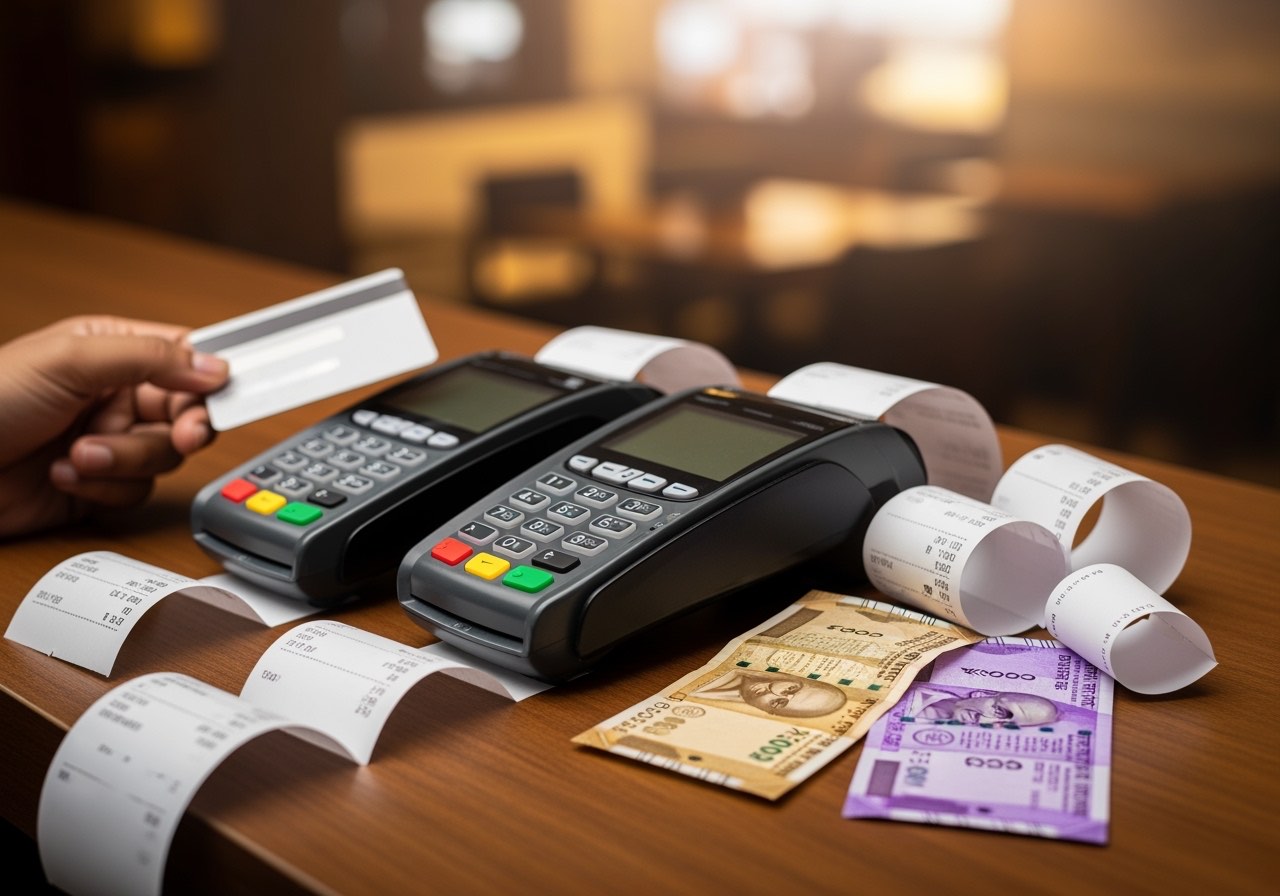
Side-by-side feature comparison
| Feature | Razorpay POS | Paytm POS | Notes / Verdict |
|---|---|---|---|
| Origin | India (Bangalore) | India (Noida) | Both India-bred |
| Card acceptance (Visa / Mastercard / Rupay / Amex) | Yes | Yes | Tie |
| UPI QR + dynamic QR | Yes | Yes — Paytm UPI heritage | Paytm edge on UPI ecosystem |
| Wallet acceptance (Paytm Wallet / others) | Limited Paytm | Native Paytm Wallet + others | Paytm wins for wallet-heavy customer base |
| Hardware form factors | Android terminal (SmartPOS) | Android terminal (SoundBox/SmartPOS variants) | Tie — similar shapes |
| Settlement cycle | T+1 standard, T+0 on premium tiers | T+1 standard, T+0 widely available | Paytm wins on same-day money |
| MDR (debit / credit / UPI) | Standard RBI bands | Standard RBI bands | Tie — RBI floors |
| Reversal / refund handling | Clean dashboard flow | Clean dashboard flow | Tie |
| Dispute / chargeback workflow | Strong, transparent | Decent | Razorpay wins |
| Dashboard / reports polish | Polished | Functional | Razorpay wins |
| Developer / API integration | Strong (Razorpay's heritage) | Decent | Razorpay wins |
| Native restaurant POS integrations | Growing | Growing | Tie |
| Distribution / installer network in Tier-2/3 | Growing | Larger (Paytm field force) | Paytm wins |
| Soundbox / audio confirmation | Available | Pioneered, ubiquitous | Paytm wins for noisy outlets |
| Terminal cost (one-time) | Subsidised on plans | Subsidised on plans | Tie, often promotional |
| Monthly rental | Tier-based | Tier-based | Verify with sales |
What each does well
Razorpay POS
- Dispute and chargeback clarity. When a customer disputes a card transaction, Razorpay's dashboard surfaces the reason code, evidence-upload window, and timeline cleanly. This matters more than operators realise until a dispute hits.
- Developer integrations. If you want to wire payment data into a custom dashboard, Restaurant Daily, your accounting tool, or a custom CRM — Razorpay's APIs are mature and well-documented.
- Dashboard polish. Daily settlement view, MDR breakdown, refund tracking — feels like a SaaS product, not a banking interface.
- Brand trust in modern restaurant teams who already use Razorpay for online payments / payment links.
Paytm POS
- Same-day settlement (T+0). For an outlet running tight cashflow — paying daily vegetable mandi, weekly staff advances — same-day settlement is genuinely useful. Razorpay offers it on tier; Paytm offers it more broadly.
- UPI heritage and wallet acceptance. Paytm's strength has always been UPI and the Paytm wallet. Customers who pay with Paytm wallet routinely won't have to re-enter anything at a Paytm terminal.
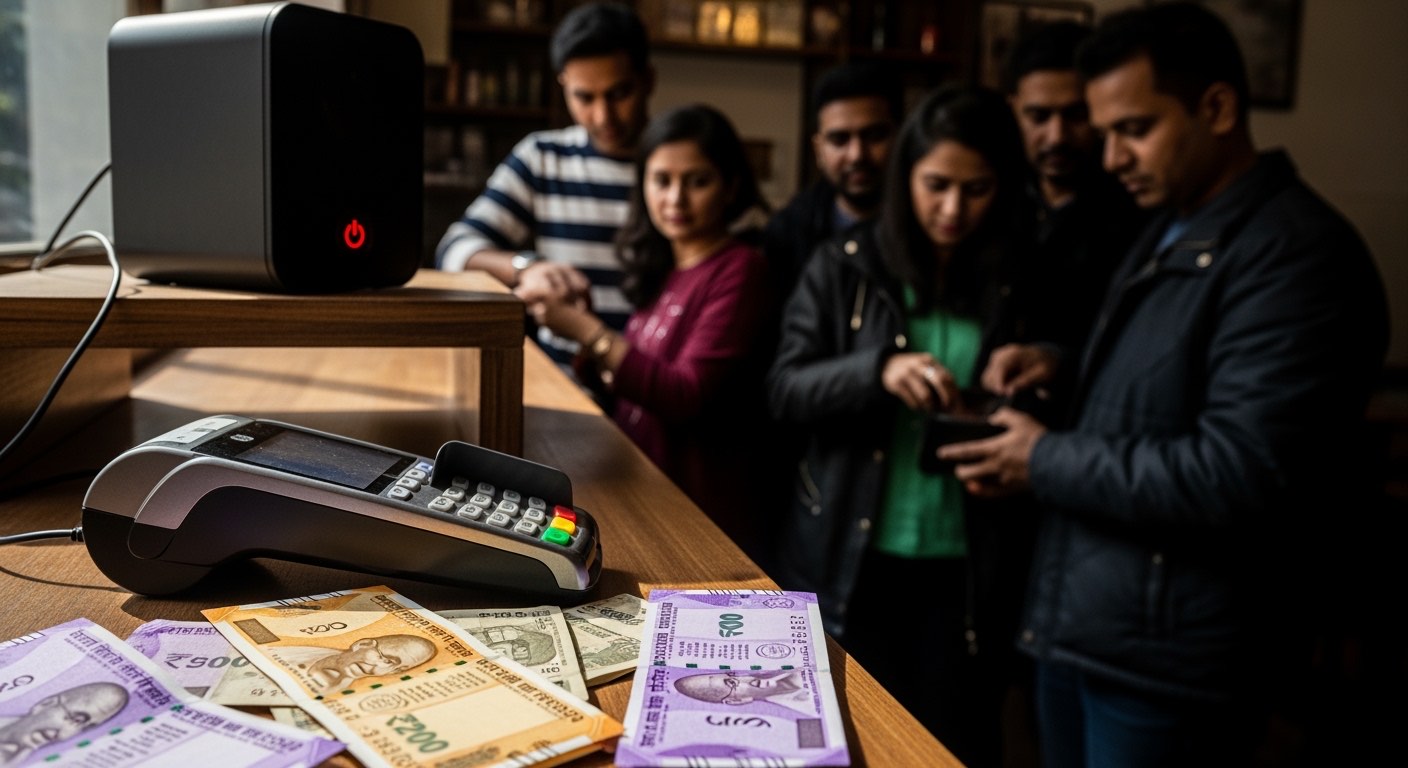
- Soundbox. The audio-confirmation device — "Paytm pe ₹420 received" — was popularised by Paytm and is ubiquitous in Indian retail. For a noisy QSR or cloud-kitchen pickup window, soundbox confirmation reduces "did the payment go through?" friction at the counter.
- Distribution. Paytm's field force in Tier-2 and Tier-3 cities is larger. If you're in a city where the nearest Razorpay rep is a flight away, Paytm's local presence shows up.
Pricing — verify before purchasing
MDR (Merchant Discount Rate) is the percentage taken on each transaction. For UPI of value up to a regulator-set ceiling, MDR is zero by RBI / NPCI rule (this has been the position since 2020 and continues into 2026 — confirm at the time of signing).
For cards and wallets, MDR sits in standard RBI bands by card type and amount:
| Channel | Typical MDR posture (verify) |
|---|---|
| UPI (P2M, within ceiling) | Zero |
| RuPay debit | Capped low (RBI rule) |
| Visa/MC debit | Standard band |
| Visa/MC credit | Higher band |
| Amex / international | Higher still |
| Wallets (Paytm / others) | Vendor-set |
Publicly listed at razorpay.com/pos and business.paytm.com — verify before purchasing. Both vendors run promotional MDR for new merchants and on-demand renegotiation for high-volume outlets. Hardware cost (terminal) is typically subsidised against transaction volume commitments.
Settlement cycle — the actual cashflow conversation
The number that matters daily is when does today's money hit the bank.
| Vendor | Standard | Premium / negotiated |
|---|---|---|
| Razorpay POS | T+1 | T+0 on eligible plans |
| Paytm POS | T+1 | T+0 widely available |
For an outlet that runs on supplier credit weekly and staff salary monthly, T+1 vs T+0 doesn't matter much. For an outlet that pays daily mandi vendors in cash and runs a tight float, T+0 is genuinely useful. Paytm has historically been more flexible on T+0. Negotiate at signing.
Dispute handling — the underrated lever
Card disputes happen. A customer sees a charge they don't recognise (or claims to), files a chargeback, and your acquirer pulls the money back from your settlement until the dispute resolves. The terminal vendor's dispute handling decides whether you spend 30 minutes or 3 hours on each.
- Razorpay surfaces dispute reason codes, deadlines, and evidence upload in a clean web flow.
- Paytm does the same but the experience is closer to a banking portal.
For a high-volume outlet (50+ card transactions a day), this UX gap compounds. Pick Razorpay if you anticipate dispute volume.
Where each loses
- Razorpay POS loses on Tier-2/3 distribution density, on T+0 ubiquity, and on wallet-customer experience.
- Paytm POS loses on dispute UX, on developer/API depth, and on dashboard polish.
Who should pick Razorpay POS
- Outlets with high card / international transaction volume (chargeback risk).
- Restaurants with a dev-savvy team integrating payments into a custom stack.
- Brands already on Razorpay for online payments / payment links / subscriptions.
- Owner-operators who'll personally read the daily settlement dashboard.
Who should pick Paytm POS
- Outlets with significant Paytm wallet customer base.
- Outlets in Tier-2 / Tier-3 cities where Paytm's field presence beats remote support.
- Operators who specifically want T+0 settlement for cashflow.
- High-noise outlets (QSR, cloud kitchen pickup window) where audio confirmation reduces friction.
A few outlets run both
We see some operators run two terminals — Razorpay for cards, Paytm for UPI/wallet — to optimise both UX and dispute handling. For a 30-cover outlet this is overkill; for a 100-cover busy QSR with 200+ daily transactions, the complexity is worth the optimisation. Most outlets should pick one and move on.
Hardware notes
Both terminals are typically Android-based, with similar capabilities: tap, swipe, dip, QR scan, optional thermal printer. Battery life is the most-cited operator complaint regardless of vendor — keep the terminal docked at the counter on a charging cradle, not roaming the floor on battery alone.
Closing recommendation
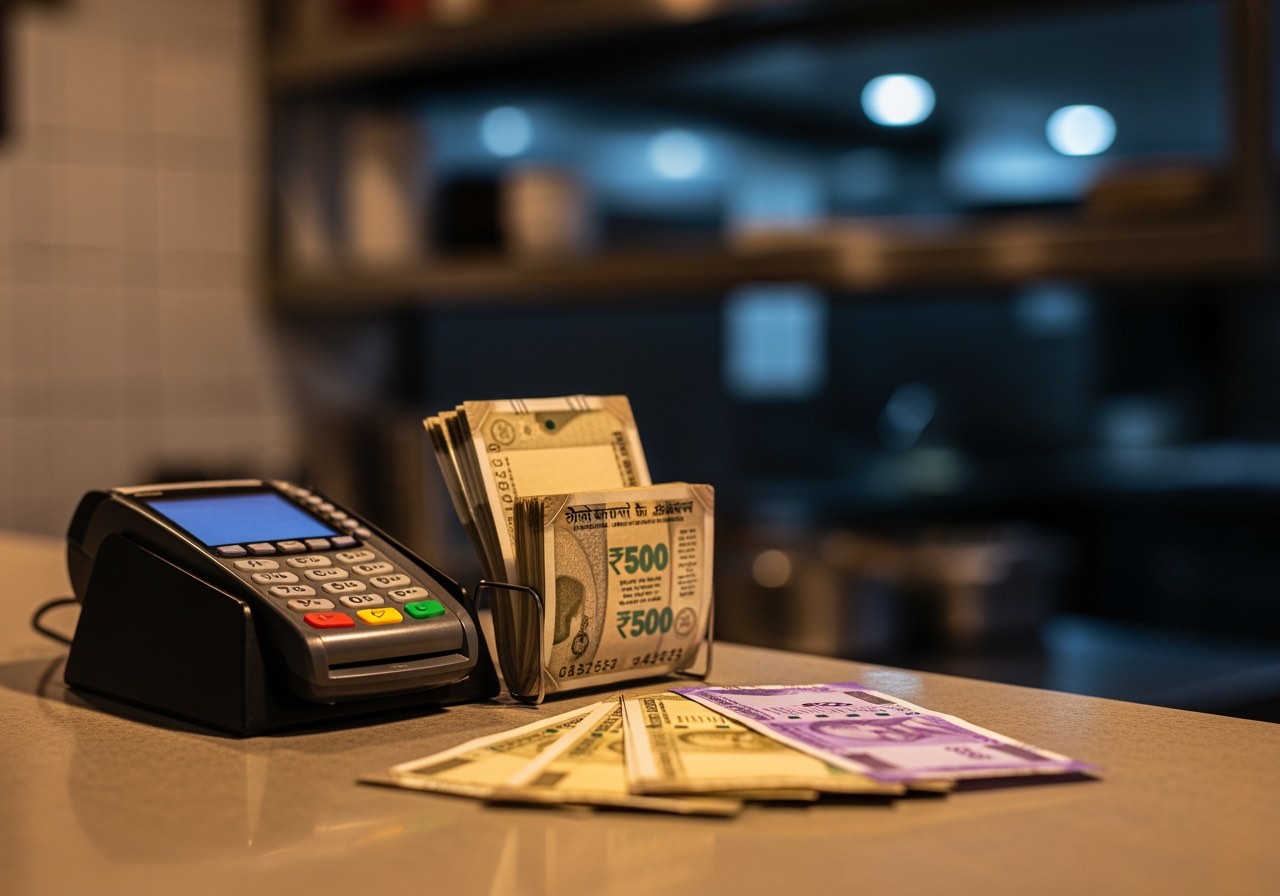
For most independent Indian restaurants in 2026, Paytm POS is the safer default for the same-day-settlement, soundbox, and Tier-2/3 distribution advantages. Razorpay POS is the right pick when dispute volume, integration depth, or dashboard polish matter more than same-day cashflow. Negotiate MDR and settlement cycle at signing — both vendors have flexibility, both run promotional pricing, and the published numbers are usually the ceiling, not the floor.
Related on Restaurant Daily
One operator playbook a week, in your inbox.
Cash close, petty cash, payroll, compliance, unit economics — sent every Monday morning. No spam, no upsell drip. Unsubscribe in one click.
Sent from noreply@restaurantdaily.ai. We never share your address.
Related reading
Best POS software for small restaurants in India — 5 picks compared (2026)
Petpooja, Posist, Limetray, Toast, and Restaurant Daily POS compared for small Indian restaurants — features, pricing posture, hardware fit, and who each is built for.
Dukaan vs Petpooja menu app for restaurants — direct ordering vs full POS
Honest comparison of Dukaan and Petpooja for Indian restaurants — direct WhatsApp/web ordering vs full POS, when each makes sense, and how some operators use both.
WATI vs AiSensy for restaurant WhatsApp marketing — pricing, templates, deliverability
Honest comparison of WATI and AiSensy for Indian restaurants running WhatsApp marketing — template approval, broadcast quality, automation, pricing posture, and who picks which.
Swiggy partner vs Zomato partner dashboards — what each shows, what's missing
Side-by-side of the Swiggy and Zomato restaurant partner dashboards in 2026 — sales, ratings, ad spend, payout reconciliation, and the gaps both leave for operators.
Tally vs Zoho Books for restaurant accounting in India — which fits which scale
Tally Prime vs Zoho Books for Indian restaurant accounting — GST filing, multi-outlet, CA workflow, and where each fits the size of your operation.