Swiggy & Zomato discount cost analysis — true take-rate after promo + commission
Calculate the true Swiggy and Zomato take-rate on Indian restaurant orders after commission, payment fees, ad spend, and promo co-funding. Free worked example + formula.
Last updated 9 Aug 2026
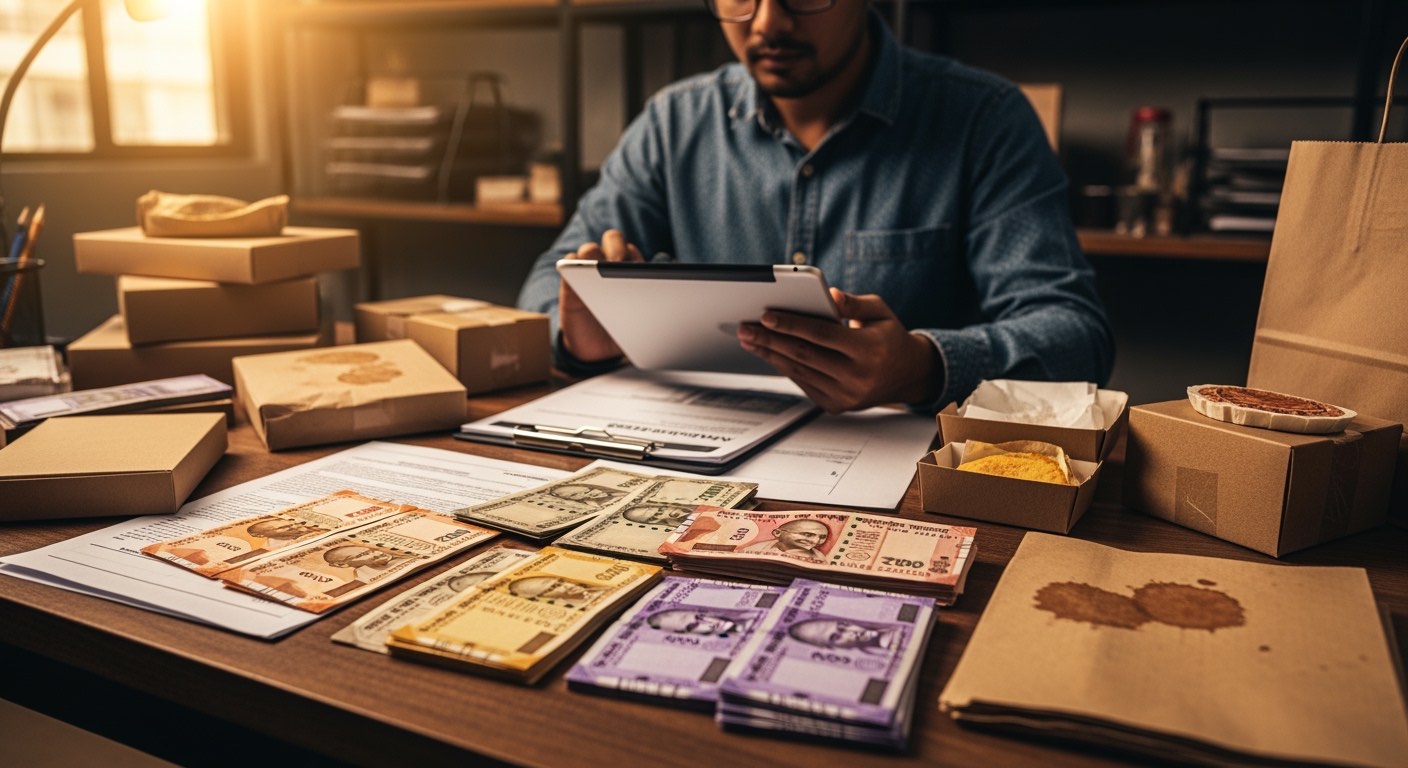
About this piece. When operators look at a Swiggy or Zomato monthly statement, the headline take is "20-25% commission". The real number — after promos, ads, payment gateway, and packaging amortisation — is closer to 38-52% of menu price on a discounted order. This piece walks through the line items, gives you a formula, and shows what a clean monthly aggregator P&L looks like.
The five layers of aggregator cost
A ₹500 menu-price order on Swiggy or Zomato passes through five subtractions before the cash hits the operator's bank:
- Discount on bill — flat, percentage, or "₹125 off above ₹399" promos. Funded mostly by the restaurant unless explicitly tagged as platform-funded.
- Commission on net bill — the platform's percentage on the post-discount value. Published rates run 18–28% depending on city, category, and whether the brand is on a "preferred" tier.
- Payment gateway / processing fee — typically 1.8–2.5% on UPI and card collections handled by the platform.
- Ads / "promote my listing" — bid-based, charged separately. Typically 4–9% of aggregator revenue for a brand actively bidding.
- Packaging charge passed to customer vs cost — the platform line shows a packaging credit; the actual packaging cost (₹8–22 per order) hits the operator.
Each of these is visible somewhere in the partner dashboard. None of them is rolled up into a single take-rate number. That's the gap this piece fills.
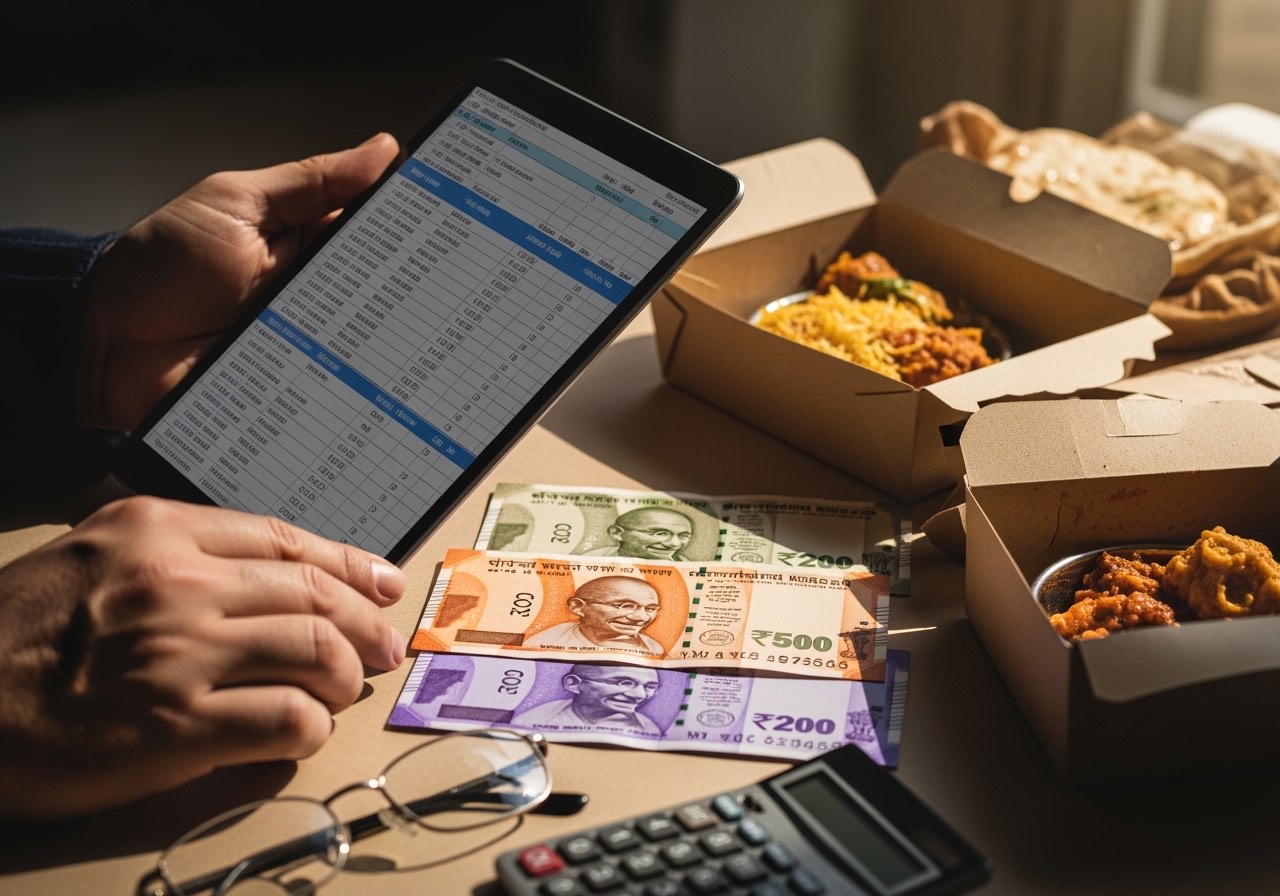
The formula — true take-rate
Net to restaurant = Menu price
                    − Discount funded by restaurant
                    − Commission % × (Menu − Total discount)
                    − Payment fee % × (Menu − Total discount)
                    − Ad spend allocated per order
                    − Packaging cost per order
                    + GST adjustments

True take-rate (%) = (Menu price − Net to restaurant) ÷ Menu price
The number that matters is Net to restaurant ÷ Menu price. If that drops below 0.50, every discounted order is below the food cost ceiling for most casual-dine and QSR formats — i.e., losing money on contribution before fixed costs.
A worked single-order example
Assume a ₹500 menu-price order, brand running a "₹100 off above ₹399" promo (restaurant-funded), 23% commission, 2% payment fee, ad spend allocated at 6% of net revenue, ₹15 packaging cost.
| Line item | ₹ | Notes |
|---|---|---|
| Menu price | 500 | Customer-visible price |
| Less: Discount (restaurant-funded) | (100) | "₹100 off above ₹399" |
| Net bill value | 400 | Commission base |
| Less: Commission (23%) | (92) | 23% × 400 |
| Less: Payment processing (2%) | (8) | 2% × 400 |
| Less: Ad spend allocated (6% of net) | (24) | 6% × 400 |
| Less: Packaging cost | (15) | Real cost, not platform credit |
| Net to restaurant | 161 | Cash actually banked |
| True take-rate | 67.8% | Platform side; restaurant keeps 32.2% |
A casual-dine outlet running a 32–35% food cost can't sustain a 32% net realisation. The order pays for ingredients and packaging, almost nothing else. The fix is rarely to leave the platform — it's to restructure the menu and promo strategy so the discount-heavy SKUs aren't the volume drivers.
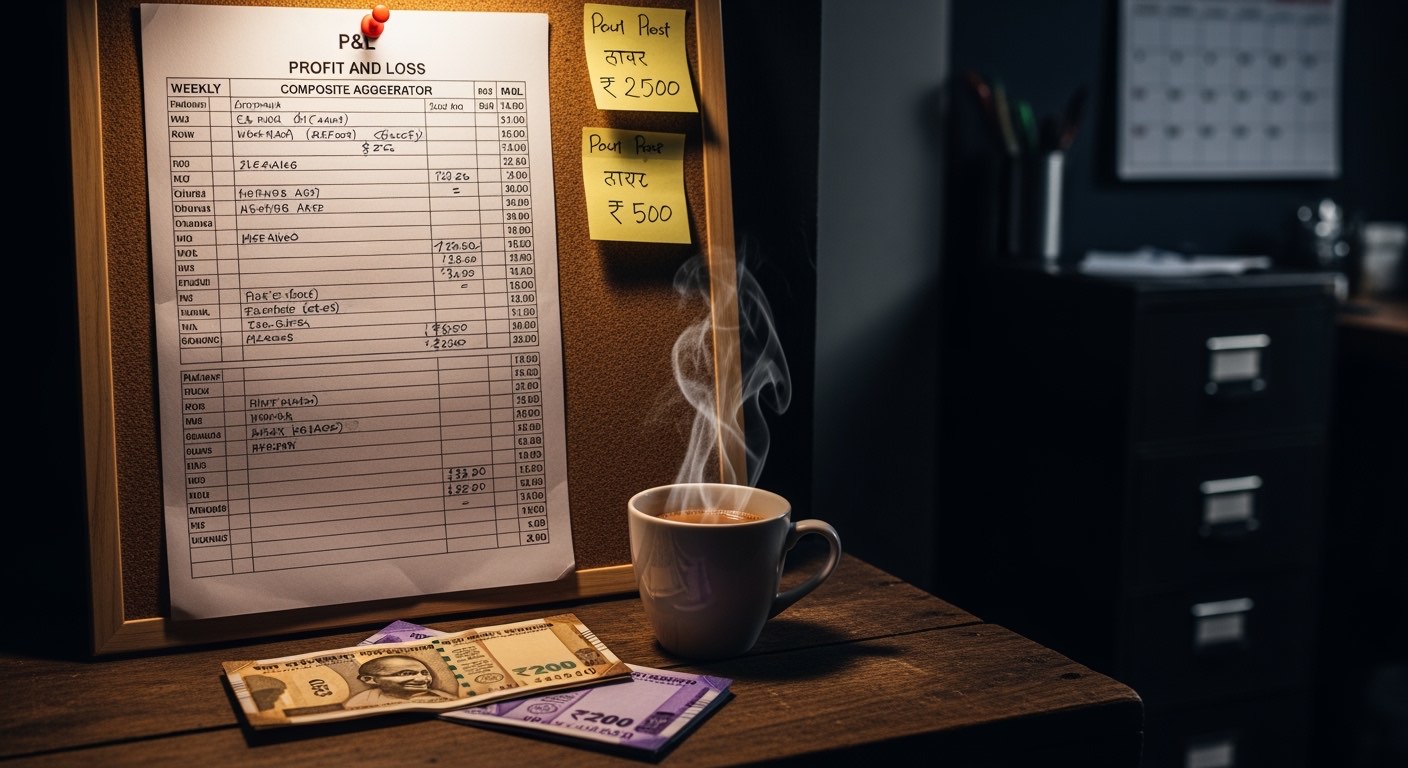
A clean monthly aggregator P&L
The single-order maths is useful for category decisions; the monthly view is what the owner reviews. A clean monthly statement reads:
| Block | ₹ | % of menu GMV |
|---|---|---|
| Menu price GMV | 8,00,000 | 100.0 |
| Discounts (funded) | (1,40,000) | (17.5) |
| Commission | (1,51,800) | (19.0) |
| Payment fee | (13,200) | (1.7) |
| Ads spend | (35,000) | (4.4) |
| Packaging cost | (32,000) | (4.0) |
| Net realisation | 4,28,000 | 53.5 |
That 53.5% is the realistic ceiling for a typical Indian aggregator-led brand running moderate promos. The healthy band sits 52–62%; below 50% is structurally loss-making for most categories.
Where operators get the maths wrong
Five recurring errors when reviewing aggregator economics:
- Reading commission as the take-rate. Commission is one line. Promo + ads + packaging is the other half.
- Ignoring ads as a cost. "Promote listing" spend is often charged to a separate card and never lands in the food P&L. It belongs there.
- Using the platform's packaging credit as packaging income. The credit is part of the customer bill; the cost is real. Net them.
- Mixing platform-funded and restaurant-funded discounts. Only restaurant-funded discounts subtract from realisation. The platform-funded portion shows separately on the settlement.
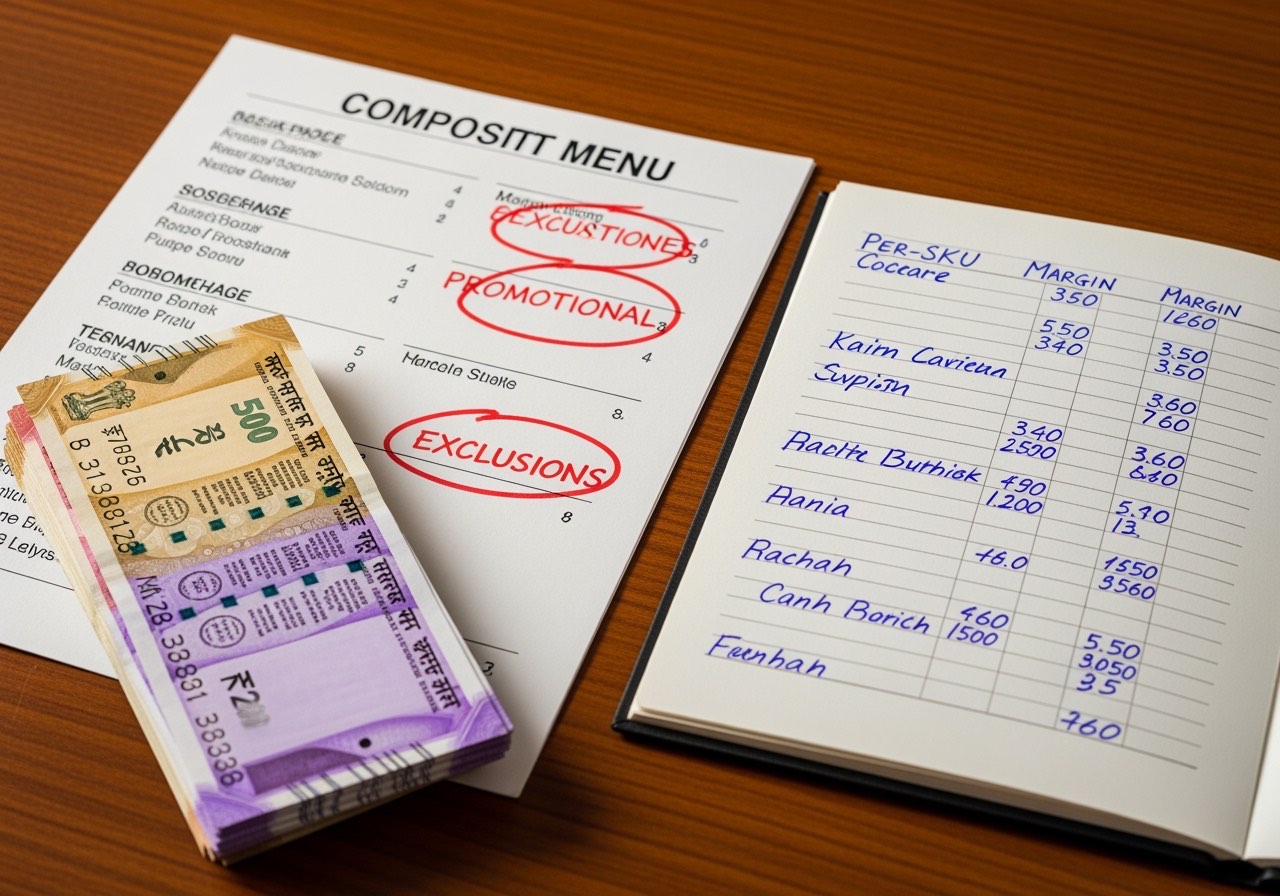
- Looking at monthly net only, never per-SKU. A brand can have a healthy 55% net at the monthly level and a -8% net on the bestselling SKU. Per-SKU cost analysis is what catches it.
A formula-driven decision rule
Before signing up for the next "₹150 off above ₹499" campaign, calculate:
Min menu price for break-even = (Food cost per order + Packaging + Other variable)
                                ÷ (1 − commission% − payment% − ad allocation% − discount%)
If the SKU's menu price is below the break-even number for the proposed promo intensity, exclude it from the campaign. Most POS and aggregator dashboards let you exclude specific SKUs from a discount; few operators use the option.
What the right operating cadence looks like
A monthly review covering:
- Net realisation % — should track to a target band per category.
- Per-SKU margin after platform deductions — flag any SKU under 18% contribution.
- Ads ROAS — ads spend ÷ incremental revenue from promoted slots, not absolute revenue.
- Discount intensity vs cover growth — if discounts climb 4 points and covers grow 2 points, the promo is buying revenue from existing customers, not new ones.
Three months of this discipline and the brand stops chasing GMV and starts chasing net contribution. The aggregator stays useful — but as a channel, not as the business.
Related on Restaurant Daily
One operator playbook a week, in your inbox.
Cash close, petty cash, payroll, compliance, unit economics — sent every Monday morning. No spam, no upsell drip. Unsubscribe in one click.
Sent from noreply@restaurantdaily.ai. We never share your address.
Related reading
COGS vs prime cost restaurant India — what each tells you and how to track both
COGS vs prime cost for Indian restaurants — what each metric tells you, the formulas, when each one is the right number to act on, and how to track both monthly.
Occupancy cost restaurant India — rent, CAM, electricity benchmarks by city
Occupancy cost in Indian restaurants — rent, CAM, electricity benchmarks by city tier, what to negotiate at lease signing, and how to keep occupancy in the green band.
Menu engineering matrix for Indian restaurants — Stars, Plowhorses, Puzzles, Dogs
Menu engineering for Indian restaurants — Stars, Plowhorses, Puzzles, Dogs explained with a free template, worked example, and an action playbook for each quadrant.
Restaurant unit economics India — the full guide from prime cost to payback
Restaurant unit economics India — the full guide from prime cost and breakeven to four-wall EBITDA, contribution per cover, and payback period, with worked examples in INR.
Restaurant labour cost percentage India — benchmarks + how to bring it down
Restaurant labour cost percentage benchmarks for India by format, what to include in the number, and a 6-step playbook to bring it down without losing service quality.