Khatabook for restaurants — what it replaces, what it can't
An honest operator look at Khatabook for Indian restaurants — what the udhaar ledger handles well, where daily cash close, POS, and GST work still need a separate tool.
Last updated 9 Aug 2026
Verdict in one paragraph
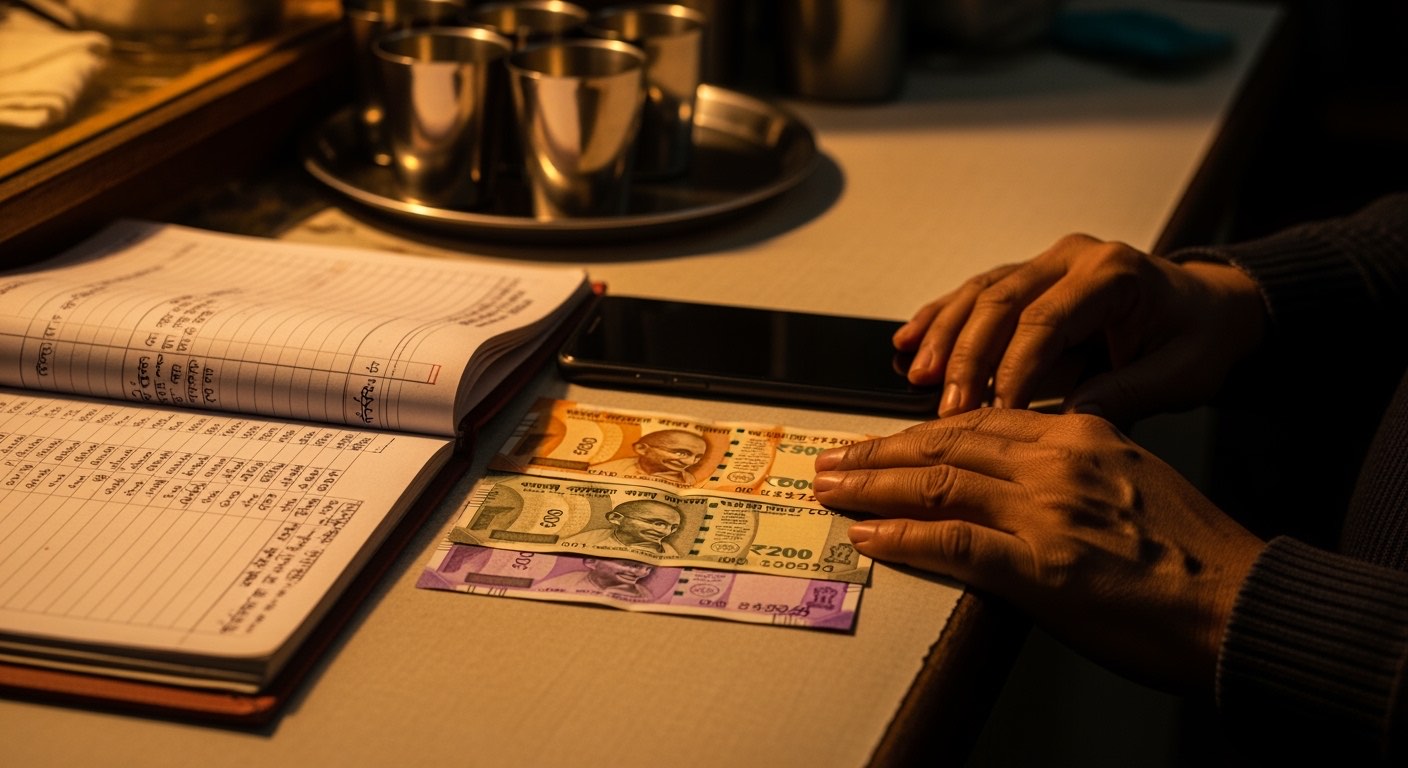
Khatabook is a strong replacement for the paper udhaar bahi behind the counter — and almost nothing else. If you are an independent dhaba, tea shop, or single-outlet restaurant in India that mostly tracks who-owes-what (suppliers, staff advances, regulars on credit), Khatabook will save you an hour a day and a notebook a month. The moment your operation involves a POS, Swiggy/Zomato payouts, GST filings, multi-shift cashier handovers, or more than one outlet — Khatabook stops being the system of record and becomes a side ledger. This piece explains the line, with examples.
What Khatabook actually is
Khatabook (publicly listed on khatabook.com — verify before purchasing) is a digital udhaar/credit ledger. The product surface is small on purpose: customer/supplier records, debit/credit entries, payment-reminder SMS/WhatsApp on overdue accounts, basic reports. It is built around the Indian small-business habit of keeping a bahi khaata — a notebook of who owes whom.
That heritage is the whole story. It is not a POS. It is not an accounting system. It is not a GST tool. The marketing language has expanded over the years (loans, payments, billing add-ons), but the operator value is still the ledger.
Where Khatabook fits in a restaurant — and where it doesn't
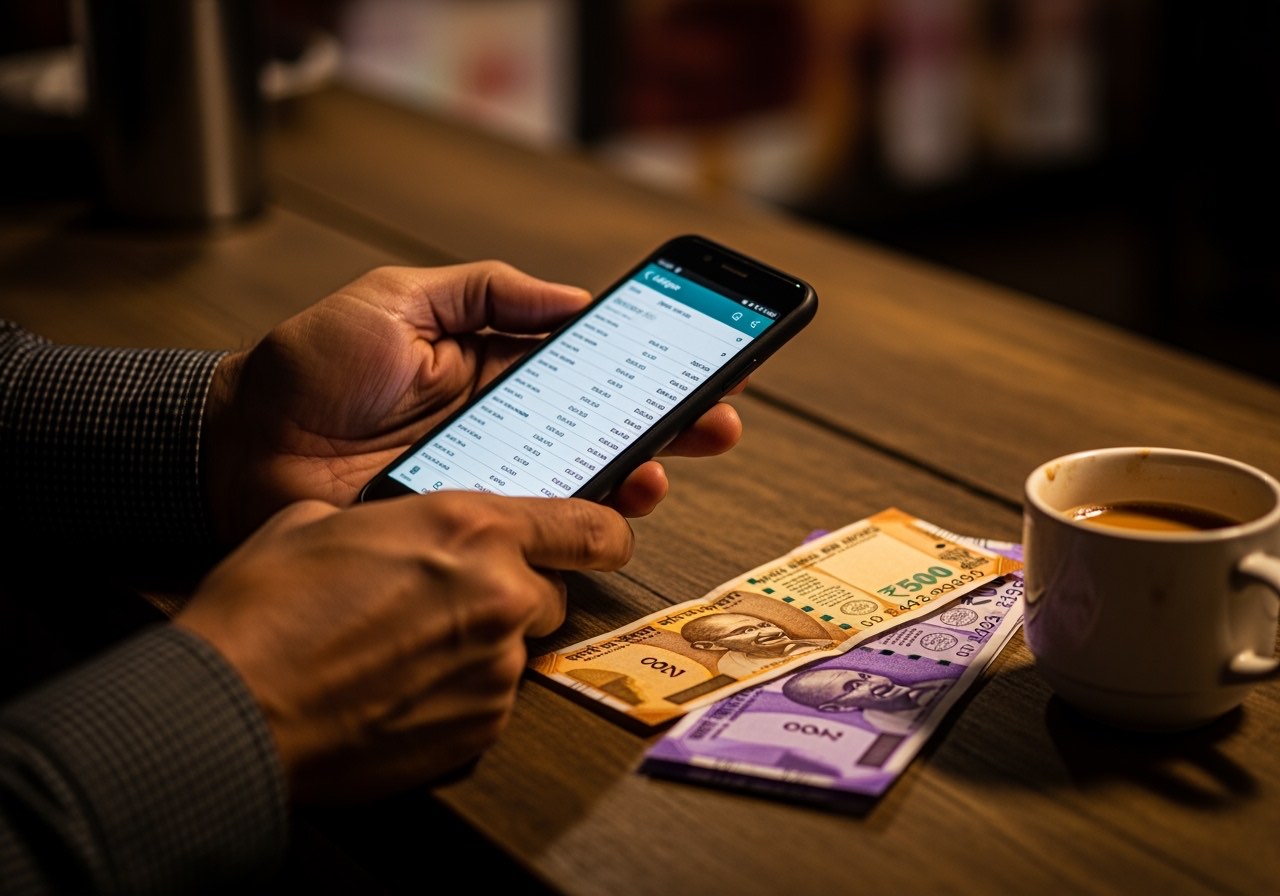
Here is the test we run with operators when they ask. Stack your daily-ops work into five buckets and ask which the tool covers:
| Workflow | What it looks like in the outlet | Khatabook fit |
|---|---|---|
| Customer udhaar (regulars on credit) | "Sharma-ji sign karke chala gaya, ₹420 baad mein dega" | Strong — purpose-built |
| Supplier credit | Vegetable mandi vendor weekly settlement, dairy daily settlement | Strong |
| Staff advances | ₹2,000 advance against next month salary | Strong |
| Daily cash close | Float reconcile, denomination count, deposit slip | Weak — no shift/float logic |
| POS / billing | Itemised KOT, tax-split bill, modifiers | Not built for it |
| Swiggy/Zomato payouts | T+7 settlements, commission/MDR breakdown | Not built for it |
| GST/GSTR-1, GSTR-3B | Output tax, ITC reconciliation | Not built for it |
| Inventory / wastage | Daily stock counts, transfer between outlets | Not built for it |
The three "strong" rows are where Khatabook earns its keep. The five "not built for it" rows are where operators get into trouble — they keep trying to bend a ledger into a system it was never designed to be.
Pricing — verify before you sign up
Pricing on Khatabook has shifted multiple times over the years. The base ledger has historically been free with paid tiers (Khatabook Pro / Biz add-ons) layered on for billing, payments, and lending features.
| Tier | What it has historically included | Notes |
|---|---|---|
| Free | Customer/supplier ledger, payment reminders, basic reports | Sufficient for a single khaata-style outlet |
| Pro / Biz add-ons | GST billing, advanced reports, multi-staff access | Pricing changes — confirm on khatabook.com |
| Payments / lending | Payment links, micro-credit (where eligible) | RBI-regulated layer; separate KYC |
Treat the table above as direction-of-travel only. Publicly listed at khatabook.com — verify before purchasing. Do not commit a multi-outlet rollout on a price we wrote in 2026.
Where Khatabook actively wins
A few patterns where operators we've spoken to are emphatic:
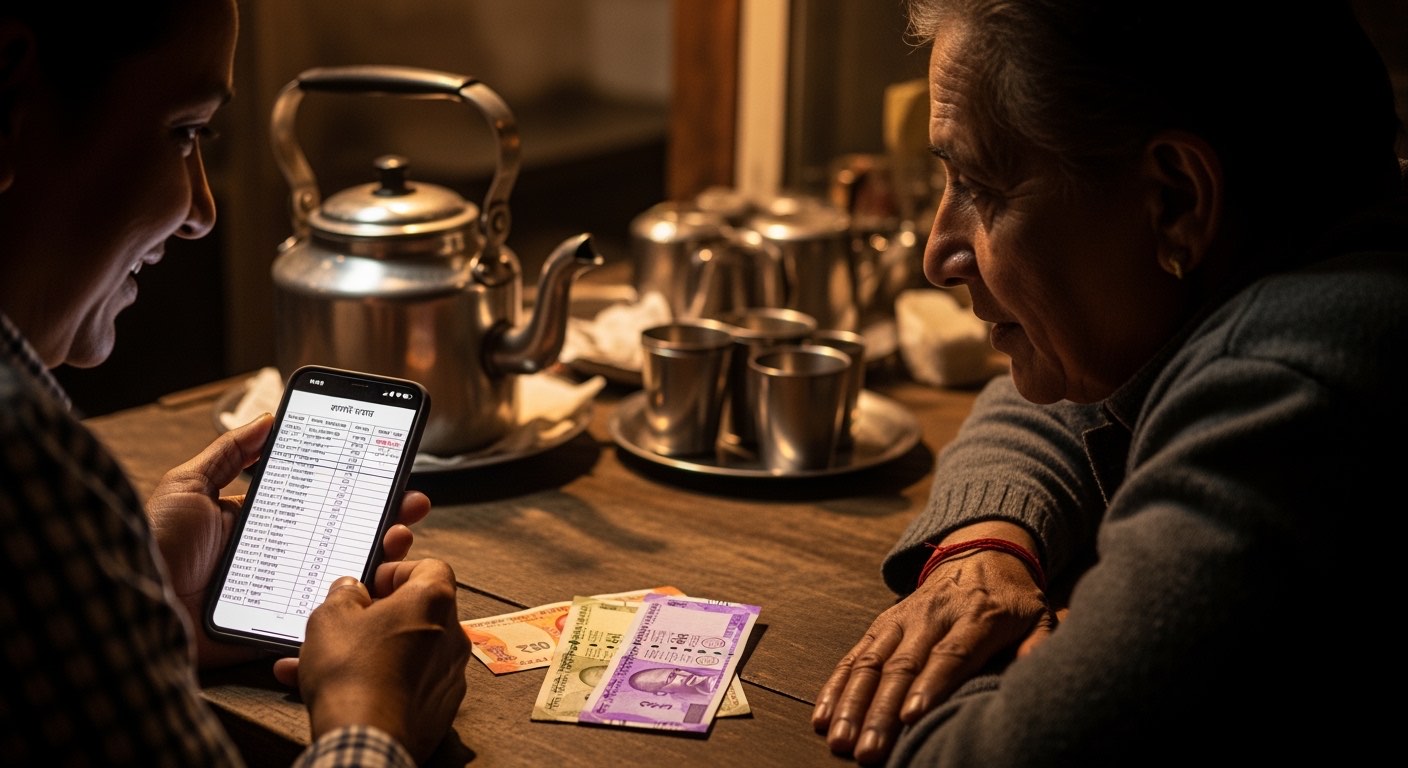
- Regulars on credit at a tea shop or dhaba. Phone-number-keyed ledger, SMS reminders on Friday for the week's tab, photo of the bill in the entry. Replaces the cloth-bound notebook cleanly.
- Vegetable mandi weekly settlement. Daily small entries, one weekly settlement, supplier sees the same ledger on his phone. Disputes drop.
- Single-owner outlets with no cashier layer. When the owner is the cashier, the ledger and the day's cash are the same record. Khatabook fits that shape.
Where Khatabook breaks down in a restaurant context
- No imprest float concept. A working restaurant runs on a fixed cash float topped up against vouchers. Khatabook has no notion of a float, a denomination sheet, or a shift handover. The cash drawer drifts and nobody notices until month-end.
- No POS line-item structure. A bill is not just a number — it has KOT items, modifiers, tax split (CGST/SGST or IGST), discounts, aggregator markdowns. Storing it as a flat ledger entry destroys every analysis you'll ever want.
- Aggregator payouts get hidden. Swiggy/Zomato pay T+7 after commission, tax-collected-at-source, and adjustments. If you log only the net deposit in Khatabook, you've lost the gross-vs-commission story — which is the single biggest margin lever in delivery-heavy outlets.
- GST filing is not its job. Khatabook will not generate GSTR-1 or 3B. You will end up exporting and re-keying into Tally / Zoho Books / a CA's spreadsheet anyway.
- No multi-outlet rollups. Two outlets, two ledgers, no consolidated view. For chain growth this becomes painful fast.
Who should pick Khatabook
- Single-outlet, owner-run dhaba, tea shop, sweet shop, or small QSR with credit-heavy customer book.
- Volume below ~₹2 lakh/month where formal POS overhead isn't justified.
- Operators who already keep a notebook ledger and want to digitise it without changing workflow.
Who should not rely on Khatabook alone
- Anyone running a POS-billed outlet (Petpooja, Posist, Limetray, Toast, or any kitchen-display setup).
- Anyone doing >20% of revenue on Swiggy/Zomato — the payout reconciliation is the work.
- GST-registered restaurants — you need a real accounting layer behind the ledger.
- Multi-outlet operators — consolidated cash position is the whole point of a system.
A practical stack: Khatabook + something else
We see this combination work in the field:
- Khatabook for customer udhaar + supplier ledger + staff advances. Phone-first. Owner-operated.
- A POS (Petpooja / Posist / Limetray / Toast) for billing, KOT, aggregator integration.
- A daily-ops tool (Restaurant Daily or equivalent — and yes, there are several) for cash close, deposit slip, multi-outlet rollups, GST-ready exports.
- Tally or Zoho Books at the accountant's end for GSTR filings.
Khatabook does not need to do everything. It needs to do the udhaar bahi well, which it does.
Closing recommendation
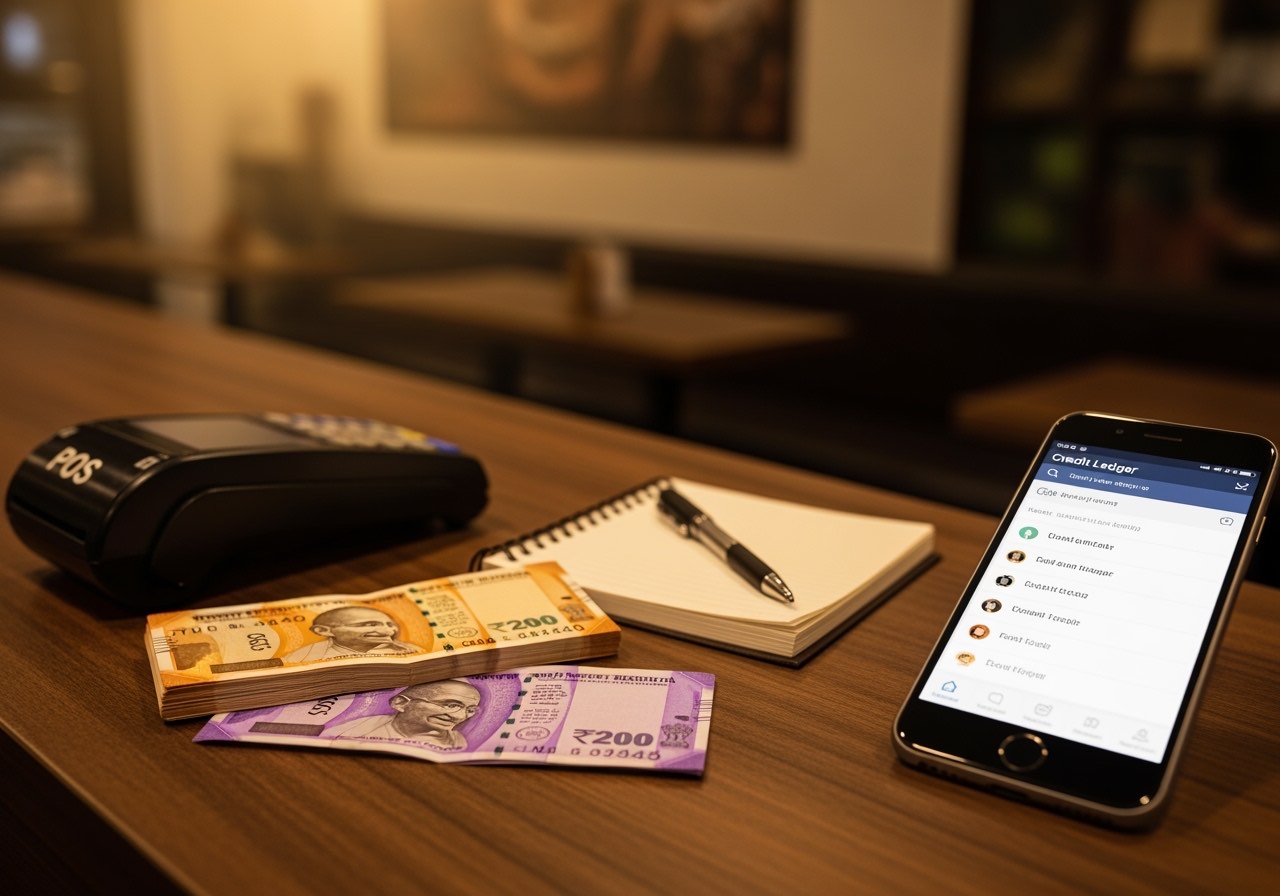
If a restaurant owner asks "should I use Khatabook?", the honest answer is: yes, for the ledger. No, as your restaurant system. Use it for the layer it was designed for. Do not stretch it to absorb POS, payouts, GST, or float discipline — those are different problems and they need different tools. The mistake we see most often is the opposite of overspending on software: operators try to do everything in a ledger app because it's free, then lose more in untracked aggregator commissions and float drift in a single month than a proper stack would cost in a year.
Related on Restaurant Daily
One operator playbook a week, in your inbox.
Cash close, petty cash, payroll, compliance, unit economics — sent every Monday morning. No spam, no upsell drip. Unsubscribe in one click.
Sent from noreply@restaurantdaily.ai. We never share your address.
Related reading
Dukaan vs Petpooja menu app for restaurants — direct ordering vs full POS
Honest comparison of Dukaan and Petpooja for Indian restaurants — direct WhatsApp/web ordering vs full POS, when each makes sense, and how some operators use both.
Razorpay POS vs Paytm POS for restaurants — MDR, settlements, hardware
Razorpay POS vs Paytm POS for Indian restaurants — MDR rates, settlement cycles, hardware, dispute handling, and which payment terminal fits which outlet shape.
WATI vs AiSensy for restaurant WhatsApp marketing — pricing, templates, deliverability
Honest comparison of WATI and AiSensy for Indian restaurants running WhatsApp marketing — template approval, broadcast quality, automation, pricing posture, and who picks which.
Swiggy partner vs Zomato partner dashboards — what each shows, what's missing
Side-by-side of the Swiggy and Zomato restaurant partner dashboards in 2026 — sales, ratings, ad spend, payout reconciliation, and the gaps both leave for operators.
Tally vs Zoho Books for restaurant accounting in India — which fits which scale
Tally Prime vs Zoho Books for Indian restaurant accounting — GST filing, multi-outlet, CA workflow, and where each fits the size of your operation.