Weights and measures licence for restaurants in India — when it applies
Weights and measures licence for restaurants in India — when it applies, who needs it under Legal Metrology Act 2009, renewal timeline, fees, and inspection checklist.
Last updated 9 Aug 2026
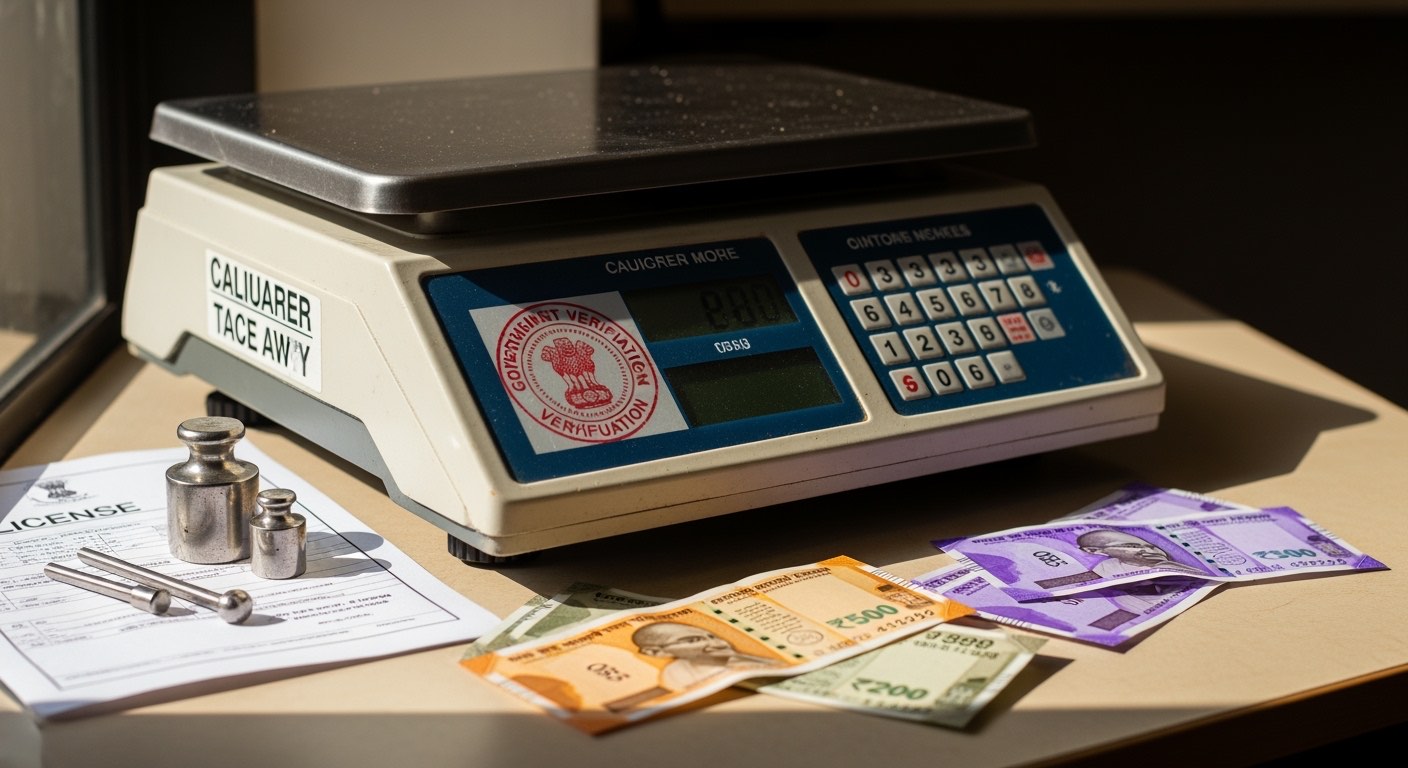
About this piece. Most restaurant owners in India only meet the legal metrology inspector once — when a takeaway weighing scale has expired verification and the inspector arrives unannounced. By then it's a fine, sometimes a sealed scale, and a week of operational friction. This piece lays out when a weights and measures licence is actually required for a restaurant under the Legal Metrology Act 2009, what to renew when, and what to keep in the file when the inspector walks in.
Does a restaurant even need a weights and measures licence?
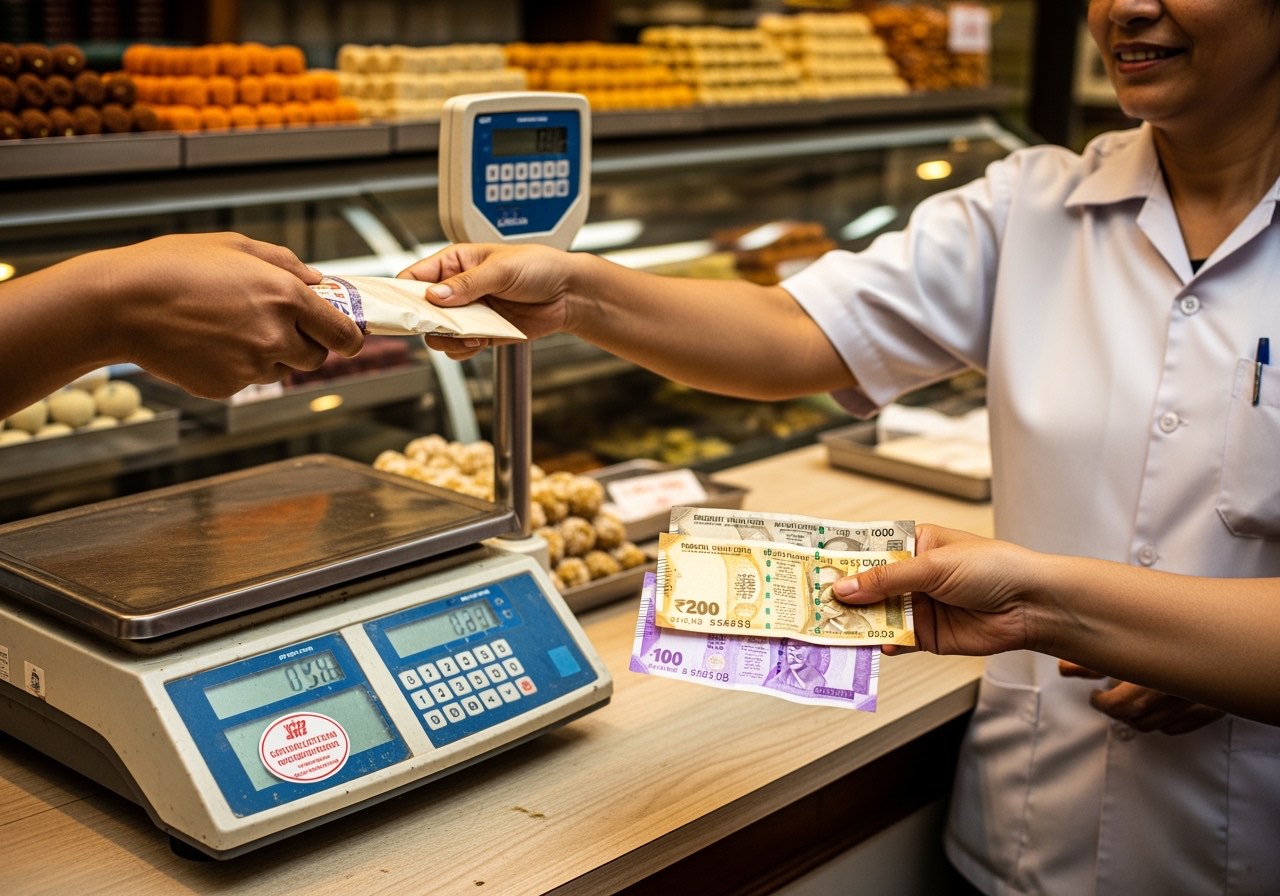
Short answer — only if you use any weighing or measuring instrument to determine what the customer pays. That's the trigger. If your kitchen weighs ingredients for portioning, that's an internal use and not regulated under the customer-facing licence. The moment you weigh paneer at a takeaway counter and price it per gram, you're inside the Legal Metrology Act 2009 perimeter.
Common restaurant scenarios that pull you in:
- Takeaway / cloud kitchen counters that sell by weight — sweets shops, biryani by the kg, paneer-by-the-gram packages.
- Bakery and confectionery counters weighing cakes, breads, dry items.
- Bar measures used to dispense spirits in standard pegs — pourer measures, 30 ml / 60 ml jiggers used as customer-facing measures.
- Pre-packaged commodities sold under the outlet's own label — see Legal Metrology (Packaged Commodities) Rules 2011.
If none of these apply — your menu is priced per plate, drinks are priced per peg from a back-of-bar dispenser, and you don't weigh anything in front of the customer — you usually do not need the licence. But the underlying weighing scales used in the kitchen still need verification stamping if they are ever cross-checked against vendor deliveries. Operators in NCR have told us inspectors increasingly look at the back-of-house scales too once they're on the premises.
The licence vs the verification — they're different things
Operators conflate two separate compliance items. They are not the same.
| Item | What it is | Who issues | How often |
|---|---|---|---|
| Dealer / user licence | Permission to use weights and measures in trade | State Legal Metrology Dept | One-time, renewal every 1–5 years (state-specific) |
| Stamping / verification | Calibration check on each instrument | Govt-authorised verifier | Annual for most scales; 2 years for some |
You need both. Many operators have a verification sticker on the scale and assume that's the licence — it isn't. Conversely, having a licence on file does not exempt you from getting each scale verified.
Verify the current state-level fee schedule on your state's Legal Metrology Department website before paying — fees are revised periodically and consultant quotes drift upward from the published list.
The paperwork you need on file
Keep these in a labelled folder near the takeaway counter — the inspector usually asks for them in this order:
- Dealer / user licence issued by the state Legal Metrology Department, valid for the current period.
- Verification certificate for every weighing instrument used in trade — bench scales, platform scales, table scales.
- Verification stickers physically affixed and legible on each instrument.
- Instrument purchase invoice with model number, capacity (Max), and minimum division (e) marked.
- Calibration log — internal record of any in-between checks the staff has done with a calibration weight.
The licence application itself is straightforward — outlet details, GSTIN, list of instruments, ID proof of the proprietor or signatory. State portals vary in usability; expect 2 to 6 weeks from application to issue.
Worked example — a 40-cover restaurant with a takeaway counter
A composite NCR operator running a 40-cover dine-in plus a small takeaway counter for sweets and dry namkeen typically has:
- 1 platform scale at the takeaway counter (5 kg / 1 g)
- 1 bench scale in the kitchen (15 kg / 2 g, internal use)
- 1 set of bar measures (30 ml + 60 ml)
The compliance posture should be:
Counter scale  -> licensed use + annual stamping
Kitchen scale  -> annual stamping (if ever used to verify vendor weights)
Bar measures   -> annual stamping, kept in clean condition with intact seal
Total annual cost across these three items, in our composite operator's experience, runs in the low four figures in INR — small, predictable, and worth budgeting as a fixed compliance line item rather than scrambling when the renewal lapses.
What the inspector actually checks
When a Legal Metrology inspector walks into the outlet, the visit usually goes like this:
- Asks to see the dealer licence — current, in the outlet's name, with the outlet address.
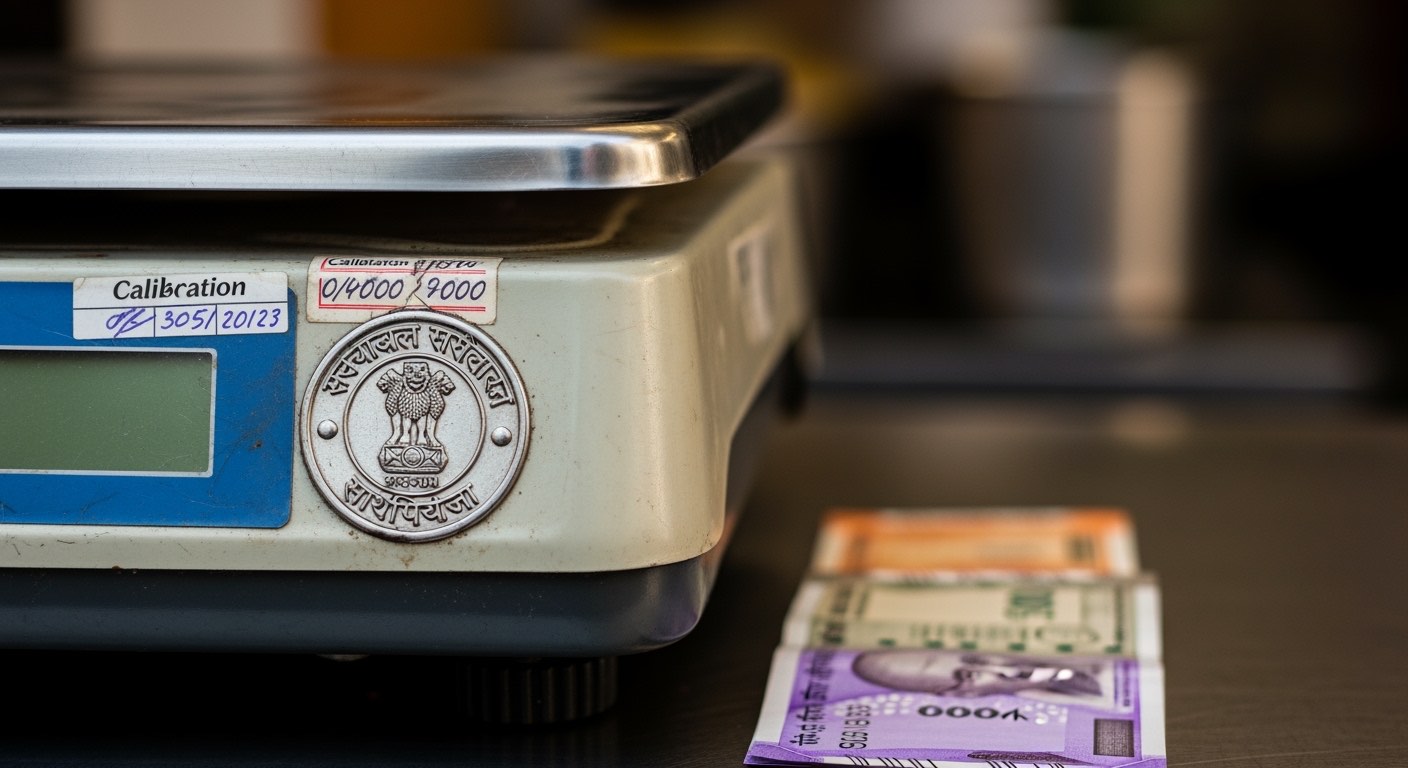
- Checks each weighing instrument for a current verification sticker.
- Tests one scale with a standard reference weight — a 1 kg or 5 kg test weight from their kit. The scale must read within the permissible error band defined for its class.
- Inspects bar measures for the embossed seal and unbroken capacity marking.
- Looks at any pre-packaged products sold under your label — checks declarations under the Packaged Commodities Rules 2011 (name, net quantity, MRP, manufacturer, consumer-care details, country of origin).
- Writes a report. Discrepancies become a notice. Notices can become fines or seizure of the instrument.
The single most common notice we hear about from operators is expired stamping on the takeaway scale. The remedy is a re-verification visit, a fresh sticker, and (usually) a fine. It is preventable with a simple calendar reminder 30 days before the stamp expires.
Renewal calendar — the one-page version
Print this and tape it inside the manager's compliance folder.
| Month | Action |
|---|---|
| Jan | Pull all verification dates into a single sheet |
| 30 days before any expiry | File for re-verification or licence renewal |
| Quarterly | Spot-check each scale against a calibration weight (₹500 weight set) |
| Annually | Refresh the labelled folder copies — licence + verification certs |
If you only do one thing — set the expiry-minus-30-days reminder on the manager's phone for every instrument on the premises. That single habit prevents 80% of legal metrology friction we see in operator WhatsApp groups.
Common pitfalls
- Buying an unstamped scale and not verifying it before first use. New scales are often shipped without trade verification. The first verification is your responsibility.
- Moving the scale between outlets. Verification is tied to the outlet and the instrument. Cross-outlet moves can invalidate the sticker; re-verify after the move.
- Bar measures missing the seal. Cheap unsealed measures are common but not trade-legal for customer-facing peg pricing.
- Pre-packed items without label declarations. A house-brand jar on the counter is a "pre-packaged commodity" — the Packaged Commodities Rules 2011 declarations apply, not just the weighing licence.
Related on Restaurant Daily
One operator playbook a week, in your inbox.
Cash close, petty cash, payroll, compliance, unit economics — sent every Monday morning. No spam, no upsell drip. Unsubscribe in one click.
Sent from noreply@restaurantdaily.ai. We never share your address.
Related reading
Signage license for restaurants in India — municipal rules, fees, pitfalls
Signage license for restaurant India — municipal advertisement rules, fees by city tier, common pitfalls in size, illumination, and renewal, plus an inspector-ready checklist.
Food handler health card for restaurant staff — FSSAI medical rule + flow
Food handler health card for Indian restaurant staff — FSSAI medical fitness rule under Schedule 4, test list, renewal cadence, joining-day workflow, and inspector-ready format.
Liquor license types for Indian restaurants — L-1 to L-19 explained
Liquor license types for Indian restaurants explained — L-1 to L-19 across states, eligibility, fees, daily ops obligations, and the operator's working comparison table.
Fire NOC for restaurants in India — when needed, documents, renewal
Fire NOC for Indian restaurants — when applicable by area and storey, the 11-document checklist, equipment requirements, state renewal cadence, and the inspection script.
Shop & Establishment Act for restaurants — registration, hours, holidays
Shop & Establishment Act registration for Indian restaurants — state-by-state hours, weekly off rules, leave entitlements, registers, fees, and renewal cadence.