Rule 6DD restaurant — when ₹10,000 cash limit applies (and doesn't)
Rule 6DD restaurant guide — when the ₹10,000 single-day cash limit applies under §40A(3), exceptions, daily-ops impact, and the workflow that keeps you safe.
Last updated 9 Aug 2026
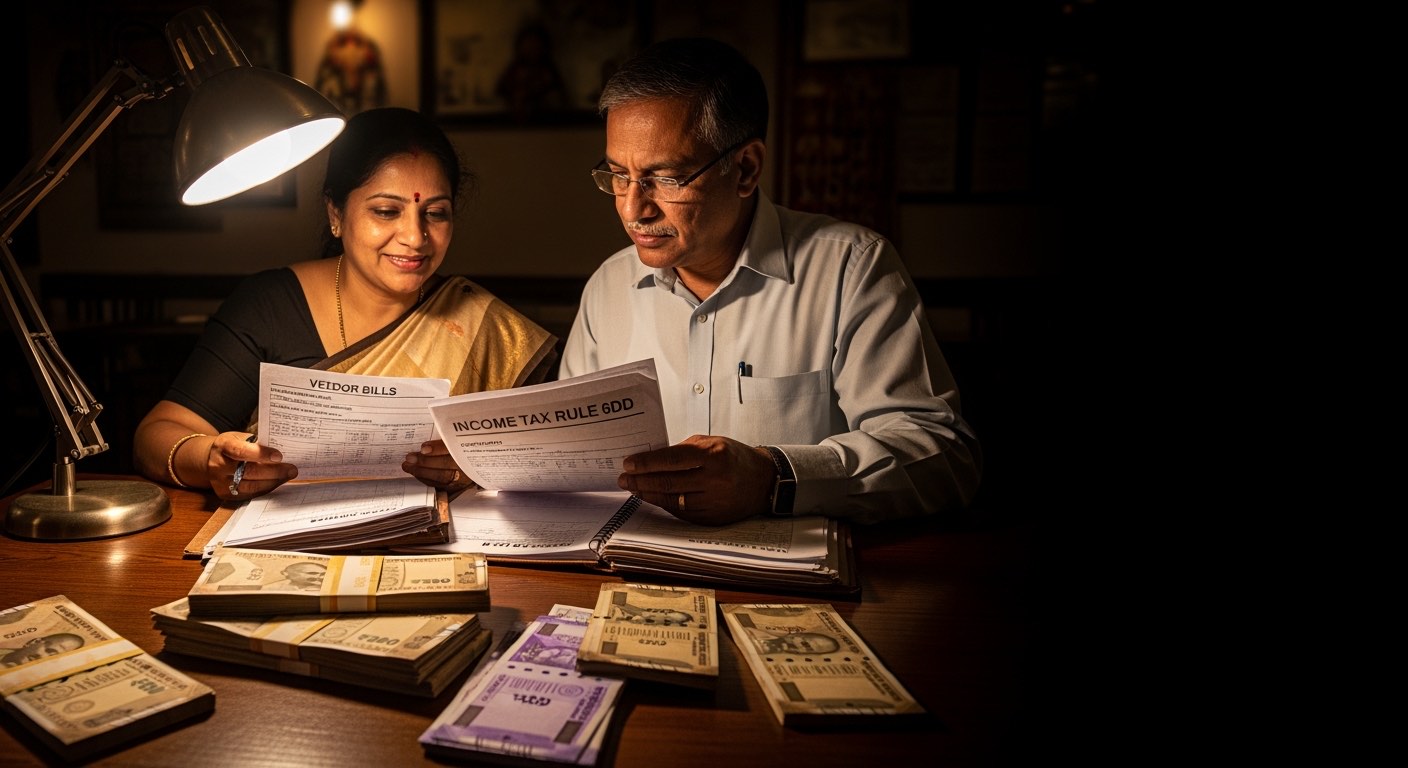
About this piece. Income Tax Rule 6DD is one of the most-cited and least-understood compliance rules in Indian restaurant petty cash. The headline is the ₹10,000 cash limit; the substance is which payments it applies to, when exceptions kick in, and what daily-ops behaviour keeps you on the right side of it. This piece walks through the rule, the exceptions, the four restaurant scenarios where it bites, and the workflow change that makes compliance automatic. Not tax advice — sanity-check with your CA.
The rule in plain terms
Section 40A(3) of the Income-tax Act, 1961 disallows business expenditure where a single payment to a single party in a single day exceeds ₹10,000 in cash. The limit is ₹35,000 for payments to transporters. The disallowance means the expense is not deductible — your taxable profit goes up by that amount.
Rule 6DD of the Income-tax Rules, 1962 lists the exceptions — situations where the cash payment is allowed despite exceeding the limit. The exceptions are narrow and specific (banking holidays, certain producer payments, payments in villages without bank branches, etc.). For day-to-day restaurant petty cash, you should assume no exception applies and design your workflow around the ₹10,000 ceiling.
The rule applies to:
- The payer — your business
- The payee — any single party
- A single day — date-of-payment basis
- Payment mode — cash, including bearer cheques
It does not apply to:
- UPI, IMPS, NEFT, RTGS, account-payee cheques, demand drafts, or any banking-channel payment
- Payments under the limit, even if cumulative across many parties
- Capital expenditure (different sections govern; consult your CA)
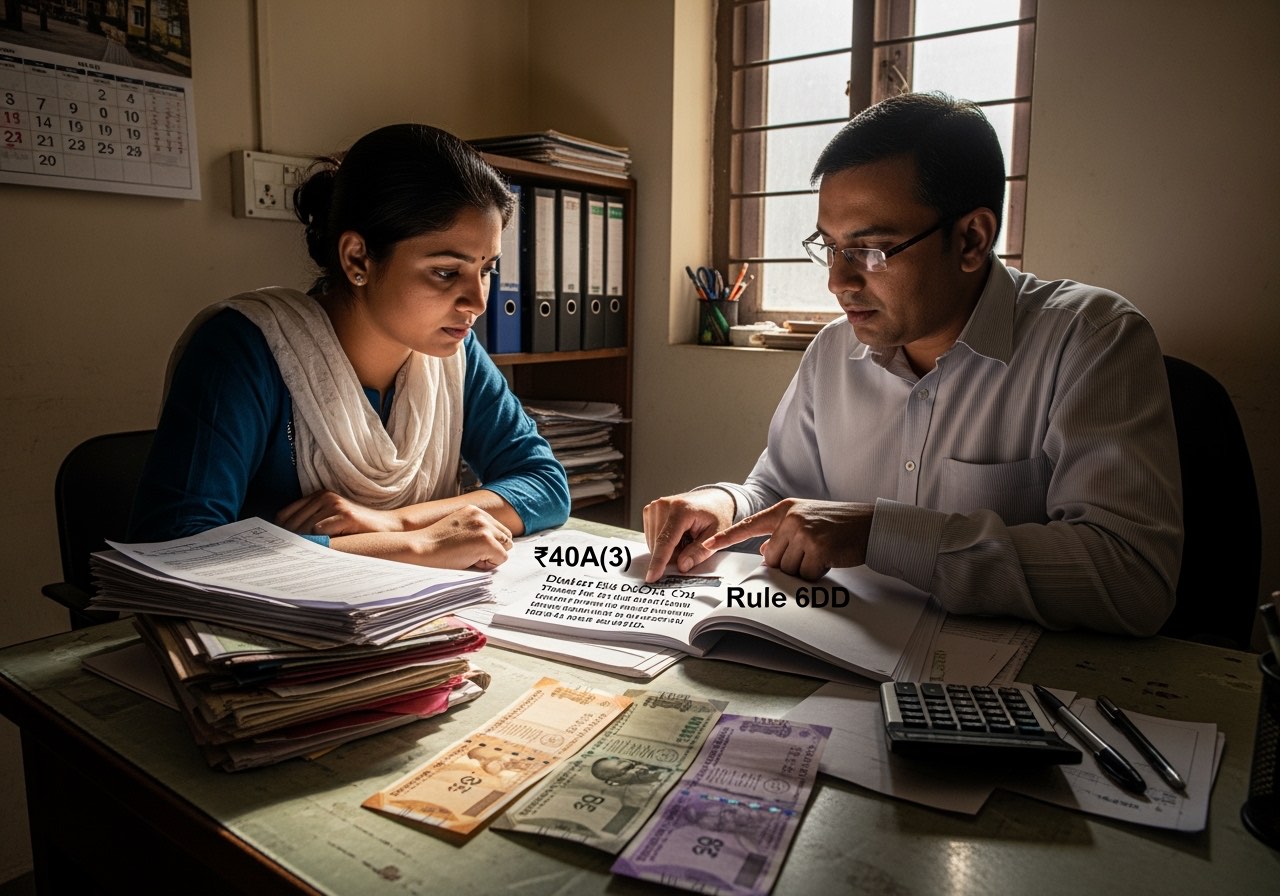
What "single party in a single day" really means
Three things the wording catches that operators often miss:
- Splitting doesn't help. Two ₹6,000 cash payments to the same vendor on the same day total ₹12,000 — disallowed. The rule looks at the aggregate, not the individual voucher.
- Multiple vouchers, same payee. A ₹4,000 voucher for vegetables and a ₹7,000 voucher for groceries to the same kirana on the same day = ₹11,000 = disallowed.
- The ₹35,000 transporter exception is narrow. It applies to payments for plying, hiring, or leasing of goods carriages — not to general courier or delivery payments. Don't assume your local tempo guy qualifies without checking.
The protective workflow is simple: any spend that could aggregate to ≥₹10,000 to a single party in a single day moves to UPI / bank transfer. Below that, cash is fine.
The four restaurant scenarios where the rule bites
Scenario 1 — Bulk vegetable / mandi purchase
A typical pre-event veg purchase before a Friday dinner rush — ₹12,000–₹18,000 to a single vendor at the morning mandi. Cash is the convention. Result: disallowed expense unless paid via UPI / bank.
The fix. Mandi payments above ₹9,500 go through UPI directly to the vendor's account. Most mandi vendors accept UPI today. If they don't, and the spend is recurring, the choice is: change vendor, or live with the disallowed deduction.
Scenario 2 — Equipment / appliance repair
The walk-in cooler stops at 8pm on a Saturday. The repair tech bills ₹14,000 cash on the spot. Without UPI infrastructure on the tech's side, the operator pays cash because the alternative is no cooler tomorrow.
The fix. Pre-vet emergency vendors. The list of "called when something breaks at night" technicians should all accept UPI. The 30 minutes spent updating that list pays for itself the first emergency.
Scenario 3 — Same vendor, multiple sub-payments
Friday morning: ₹4,500 cash for veggies. Friday evening: ₹6,500 cash to the same vendor for a top-up. Aggregate = ₹11,000 = disallowed. The cashier saw two vouchers below ₹10,000 and assumed safety; the rule sees one party in one day.
The fix. The voucher template flags repeated payments to the same recipient on the same day. Excel conditional formatting; PDF version, manager spot-check at top-up. Either way the second payment to the same vendor on the same day, if it would push aggregate above ₹9,500, goes UPI.
Scenario 4 — Salary / staff advance in cash
A cash salary handout to a single staff member of ₹12,000 on payday. The Employees' provident fund and labour-law issues aside, this also breaches §40A(3). The expense (salary) is disallowed for the year on that ₹12,000.
The fix. Salaries above ₹10,000 paid to bank account, period. Staff advance also runs through bank, see salary advance format. No exceptions.
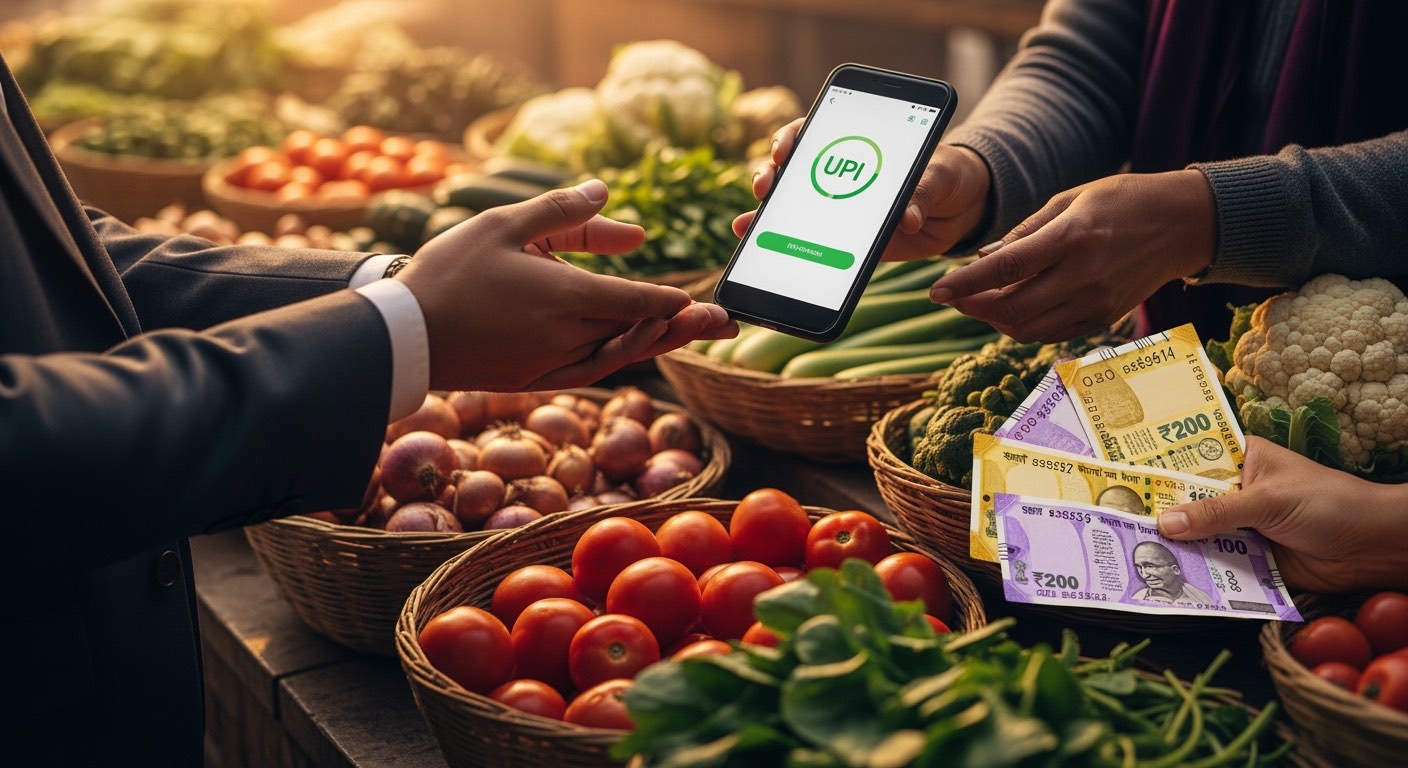
The Rule 6DD exceptions — what they say and why they rarely apply
The exceptions in Rule 6DD include payments:
- To the Government (RBI / central / state / banks)
- By any letter of credit, mail/telegraphic transfer, electronic clearing, etc. (which are non-cash anyway)
- To agriculturists, producers of agricultural / forest / dairy / fish / poultry products for the produce of those activities — direct producer payments
- In a village or town not served by any bank, where the recipient ordinarily resides or carries on business
- As terminal benefits to employees up to ₹50,000
- On a banking holiday or strike day, where the recipient required immediate cash
- To certain other specified categories
For restaurant petty cash, the most cited is exception 3 — direct producer payments — which some operators try to apply to mandi vegetable purchases. The catch: it applies to direct producer payments, not to traders or middlemen. Most mandi vendors are traders, not the agriculturists themselves. Whether your specific vendor qualifies is a fact-finding exercise your CA needs to do; the safe default is to assume no.
The exceptions exist for genuine outlier scenarios. Treating them as routine workarounds is a path to a disallowance at audit. Design the workflow to not need the exception.
The voucher-side workflow that keeps you safe
Two changes to your PCV practice make Rule 6DD compliance near-automatic:
Change 1 — A "₹9,500 ceiling" rule on every voucher
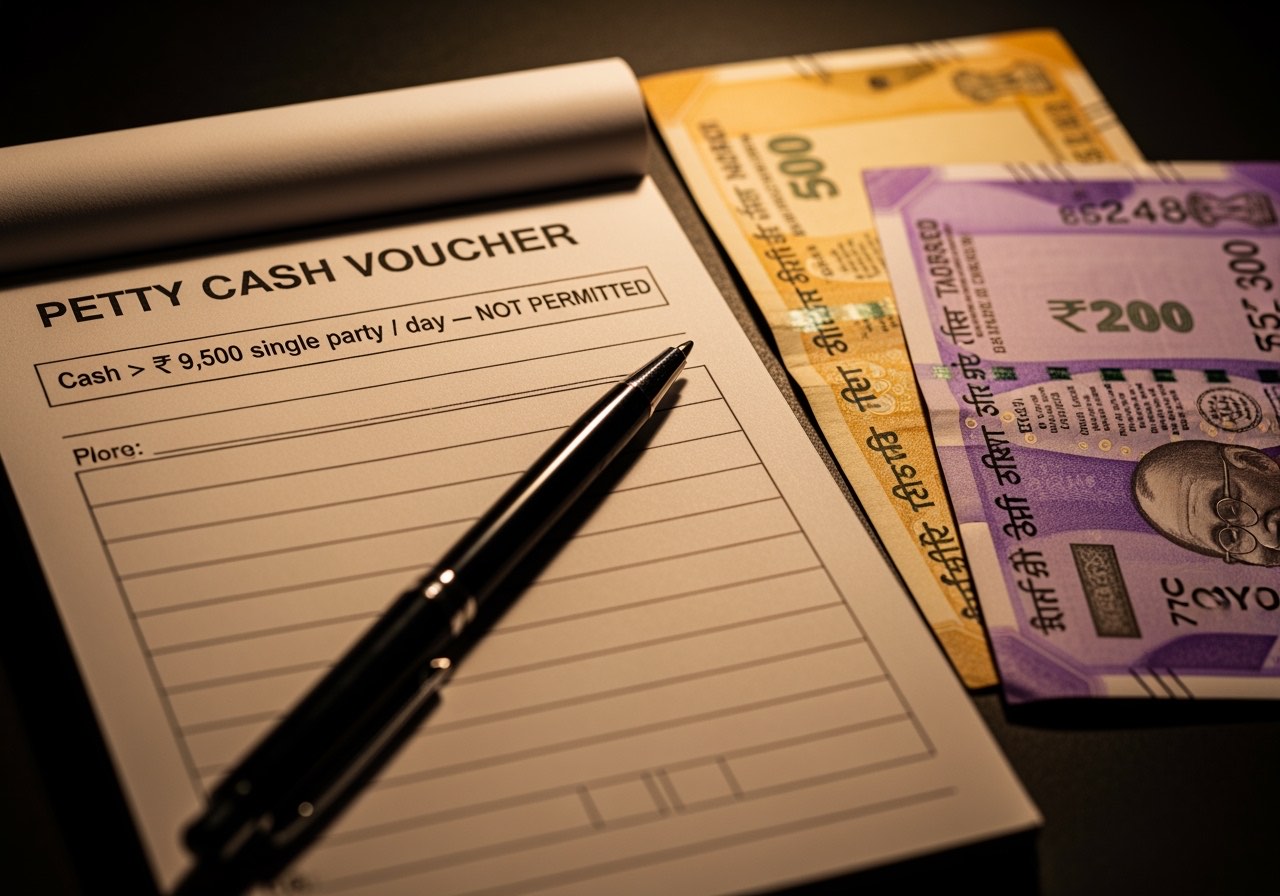
Print or display a clear instruction at the top of the voucher pad: "Cash payments ≥ ₹9,500 to any single party are not permitted. Above this amount → UPI / bank only."
The ₹9,500 (not ₹10,000) is deliberate — gives ₹500 of buffer for any small same-day top-up that might push aggregate above ₹10,000.
Change 2 — A daily payee aggregation check
End-of-day, before bundling vouchers, the cashier sums vouchers by payee name. Any payee with aggregate ≥ ₹9,500 gets flagged. If the cash-handling already happened, the manager and owner discuss: was this avoidable, who can move to UPI, are we paying a recurring vendor that should be on bank.
In Excel-template versions, this is a pivot table that runs on the day's voucher sheet. In paper versions, it's a 2-minute end-of-day visual check.
What to do if a Rule 6DD breach has already happened
If an audit (internal, CA, or statutory) finds a breach:
- Identify the disallowed amount — sum of cash payments above the ₹10,000 limit.
- Quantify the tax impact — disallowed amount × applicable income tax rate. For a small restaurant, this is the marginal rate on profits (often 25–30%, depending on entity type and presumptive scheme).
- Adjust the year's return — your CA computes the corrected taxable profit and the additional tax + interest under §234B/234C.
- Fix the workflow forward — voucher pad rule + daily aggregation check + emergency vendor UPI list. Don't repeat.
Rule 6DD breaches are usually correctable at the return-filing stage if caught before assessment. Caught at assessment, the cost is bigger — additional tax, interest, possible penalty. Quarterly internal audit (Point 7 in our petty cash audit checklist) is the cheapest defence.
What about UPI without GST invoice?
A common operator question: if the vendor takes UPI but doesn't give a GST invoice, is the expense still allowed?
Two separate questions:
- Income tax deductibility — UPI payment satisfies §40A(3). Expense is deductible (subject to other tests like business purpose and ordinary expense).
- GST input tax credit — without a tax invoice with the vendor's GSTIN, no ITC under §16. The expense is deductible but no ITC.
So UPI-without-invoice is a strictly better state than cash-without-invoice (the latter risks 6DD too). The best state is UPI-with-invoice — fully deductible and ITC-eligible.
Sample policy line for your petty cash policy
Add this line to Section 2 of your petty cash limit policy:
"All cash payments to any single party in any single day are capped at ₹9,500 in aggregate. Any payment that would breach this aggregate must be made via UPI, NEFT, IMPS, or account-payee cheque. This policy enforces compliance with Income Tax §40A(3) and Rule 6DD."
That single line, posted on the back-office board and printed on the voucher pad cover, is the operating-level translation of Rule 6DD.
Where this fits with the rest of compliance
Rule 6DD is one strand of the petty cash compliance posture:
- GST input credit on petty spends — GST petty cash expense for restaurants
- Voucher format with the ₹10,000 flag — petty cash voucher format India
- Quarterly Rule 6DD check — petty cash audit checklist (Point 7)
Get the voucher format right, the aggregation check daily, the audit quarterly — Rule 6DD becomes invisible. Skip any of the three and a single bulk vendor payment can wipe a quarter of operating margin.
What to do this week
Print the "Cash > ₹9,500 single party / day NOT PERMITTED" card. Stick it on the voucher pad cover and the back office board. Train the cashier on the daily aggregation check. Audit the last 90 days of PCVs for any breaches and discuss with your CA before next return filing.
Related on Restaurant Daily
- GST petty cash expense for restaurants — the partner compliance piece
- Petty cash voucher format India — free template — the voucher with the Rule 6DD flag
- Petty cash limit company policy template — the policy that enforces the ceiling
One operator playbook a week, in your inbox.
Cash close, petty cash, payroll, compliance, unit economics — sent every Monday morning. No spam, no upsell drip. Unsubscribe in one click.
Sent from noreply@restaurantdaily.ai. We never share your address.
Related reading
GST petty cash expense for restaurants — input credit, RCM, Rule 6DD
GST on petty cash expense for Indian restaurants — what you can claim as input credit, when reverse charge kicks in, and how Rule 6DD interacts with cash spends.
Petty cash voucher format India — free Excel + Google Sheets template
Petty cash voucher format for Indian restaurants — 9 fields covering Income Tax Rule 6DD + GST input credit. Free Excel, Google Sheets, and printable PDF templates.
Petty cash limit company policy — single-page template for restaurants
Petty cash limit company policy template for Indian restaurants — what limits to set per voucher, per category, per month. Single-page, free, ready to deploy.
Petty cash audit checklist India — 12-point quarterly review for restaurants
Petty cash audit checklist India — 12-point quarterly review for Indian restaurants. Voucher integrity, GST, Rule 6DD, control gaps. Free printable checklist.
Cashier accountability form — free template for Indian restaurants
Cashier accountability form for Indian restaurants — free declaration template + how to deploy it without alienating staff. Operator-grade controls.