Fine-dine vs QSR operations in India — staffing, inventory cycles, margin maths
Fine-dine vs QSR operations in India compared — staffing ratios, inventory cycle, prep time, margin maths, and why running one like the other quietly destroys margin.
Last updated 9 Aug 2026
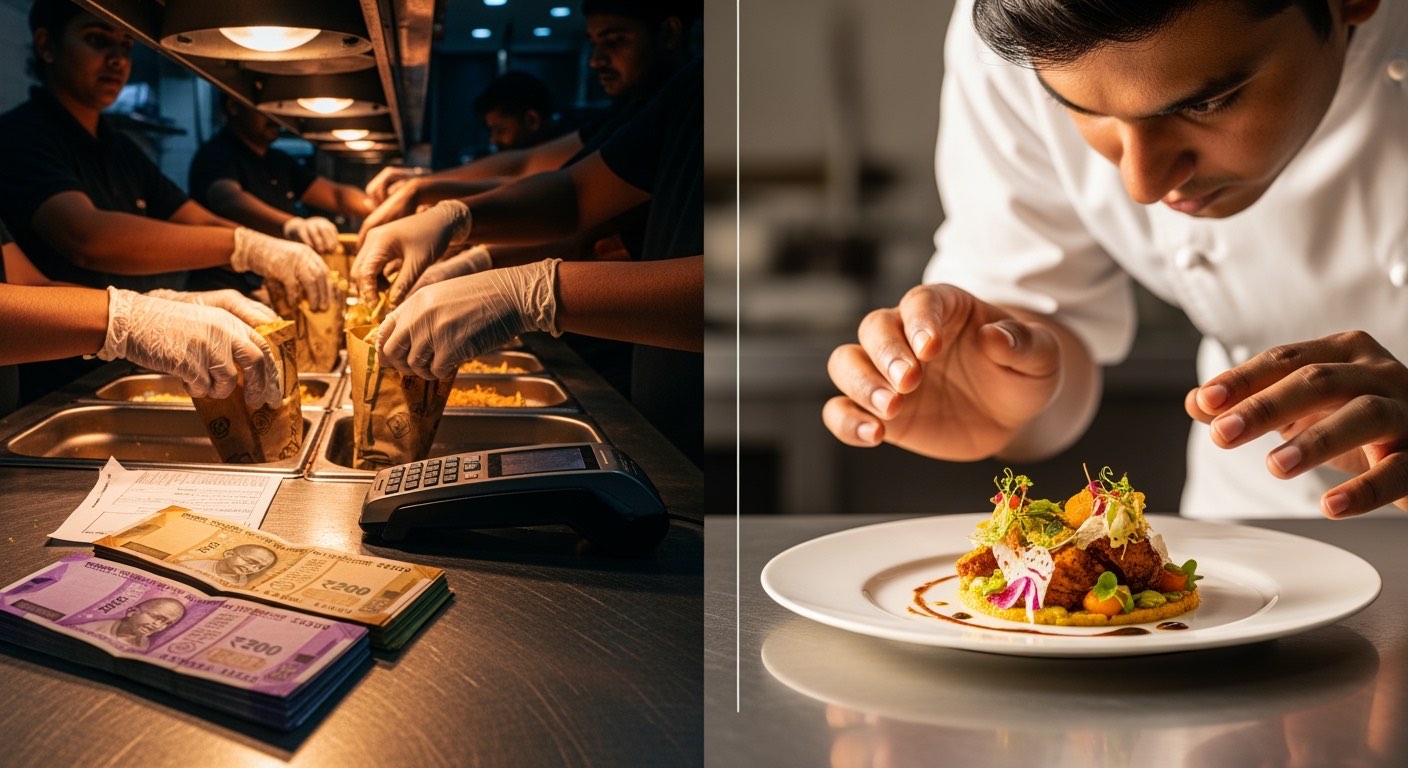
About this piece. A new operator who comes from a QSR background and opens a fine-dine — or vice versa — almost always carries a wrong mental model into the new format for at least 6 months. The two formats are categorically different operating problems. This piece lays out the differences across staffing, inventory cycles, prep time, margin maths, and the daily ops loop. Read this if you're switching, advising, or comparing.
The two formats in one paragraph each
QSR (Quick Service Restaurant) — counter-service or limited-service format, ticket size ₹150–₹450, throughput-led, menu of 25–60 SKUs, food prep windowed for speed, table turn 25–35 minutes (when there are tables), staffing lean and cross-trained. Examples: standalone burger/pizza/biryani outlets, food court counters, tier-1/2 city ghar-ka-khana QSRs.
Fine-dine — full-service, ticket size ₹1,500–₹4,500 per cover, experience-led, menu of 60–120 SKUs across appetiser/main/dessert + bar, prep done à la minute or in mise-en-place windows, table turn 75–110 minutes, staffing layered (kitchen brigade + service hierarchy + sommelier/host). Examples: hotel-attached fine-dines, standalone chef-led restaurants in Bandra/MG Road/Koregaon Park.
The two formats are not on a spectrum. They are different businesses sharing a building type.
Staffing — the most-misunderstood difference
| Metric | QSR | Fine-dine |
|---|---|---|
| Front-of-house ratio | 1 per 25–30 covers | 1 per 8–12 covers |
| Kitchen brigade depth | 2–4 stations, 1 chef + 2 helpers | 5–8 stations, head chef + sous + 4–6 cooks |
| Cross-training | High (any cook can run any station) | Low (each cook owns a station; depth over breadth) |
| Service language | Order-taking + handoff | Sales (upsell) + relationship |
| Cost as % of revenue | 14–18% | 22–28% |
A QSR operator opening a fine-dine commonly under-staffs the floor — assumes "if 1 server can handle 25 covers in QSR, then 2 can handle 50 covers in fine-dine". They can't. Fine-dine service includes course-pacing, wine pairing, ambient attention — that's not throughput, that's choreography. Under-staffed fine-dine = bad reviews, low repeat, dead in 14 months.
A fine-dine operator opening a QSR commonly over-staffs and over-engineers the menu — runs the QSR with a brigade-style kitchen, 90 SKUs, plated presentation. The format can't carry the labour cost. Over-staffed QSR = 22% labour on QSR-margin food = bleed.
Inventory cycle
QSR runs on fast-rotating inventory. Most ingredients turn 2–4× a week. Forecast precision is the single biggest skill — you order tight, you stock-out occasionally, you wear it.
Fine-dine runs on slow-rotating premium inventory. Imported wines, aged cheeses, premium proteins. Some SKUs turn once a month. Capital tied in inventory is materially higher; deadstock is the silent killer.
| Metric | QSR | Fine-dine |
|---|---|---|
| Inventory turns / month | 12–18× | 3–6× |
| Days of inventory on hand | 2–4 days | 8–14 days |
| Inventory value as % of monthly revenue | 4–7% | 15–25% |
| Wastage % target | 4–7% | 3–5% (but each SKU costs more) |
| Stock-take frequency | Weekly per SKU; daily for top movers | Daily for premiums; weekly for non-premium |
The fine-dine SKU that wastes is more expensive per incident. Two bottles of mis-stored ₹14,000 single malt going off is a worse week than 200 stale buns at a QSR.
Prep time and the kitchen day
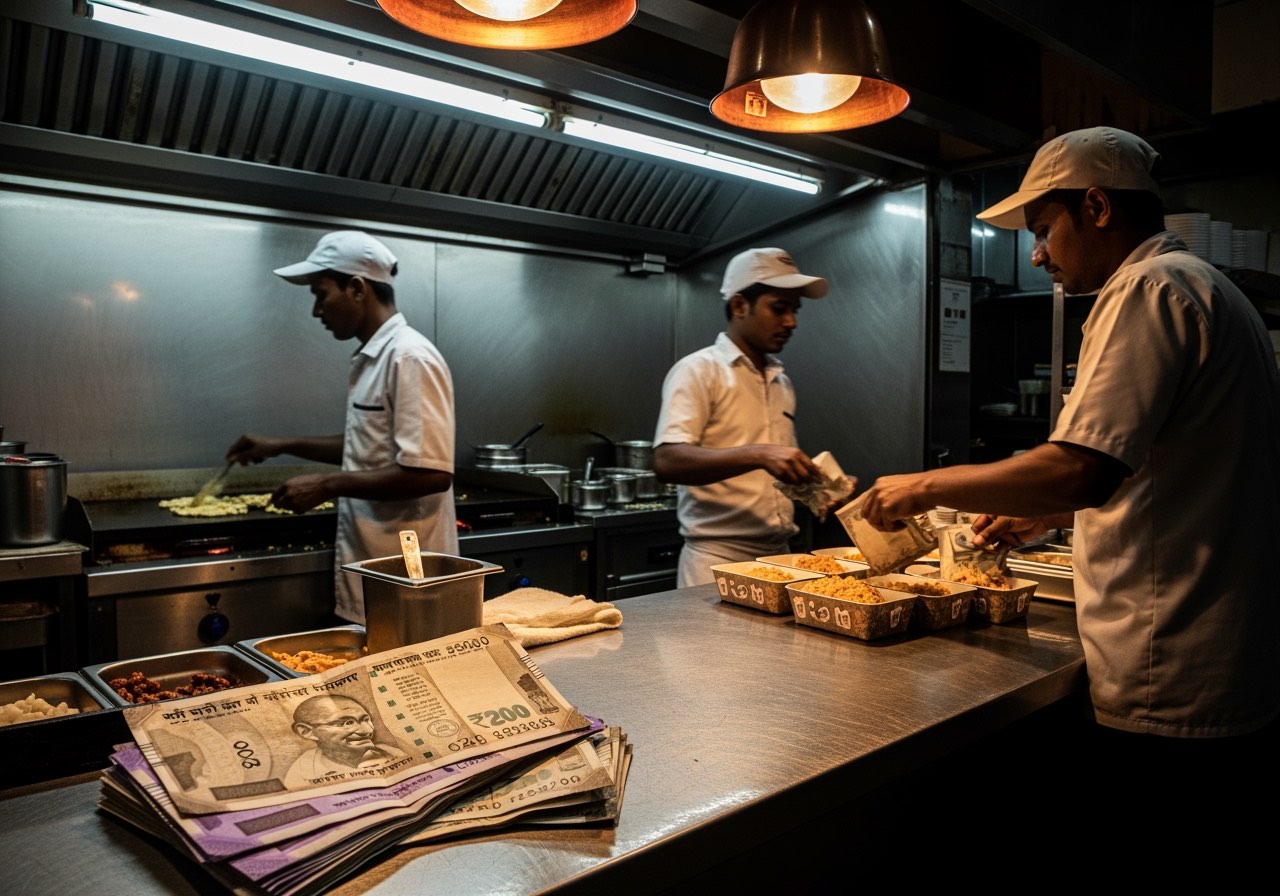
QSR prep is shift-bracketed: morning prep 8–10am, evening prep 4–6pm. Service windows are well-defined; mise-en-place is heavy on commodity items (chopped onions, masala mixes, marinades).
Fine-dine prep is layered: early-morning stocks (6am), mid-morning butchery (10am), pre-service mise (4pm), à la minute through service. The chef's day is 13–14 hours; the cook's day is 11–12.
A QSR cook who joins fine-dine and prepares everything by 5pm "to be ready for service" has actually destroyed the format — the food won't taste freshly cooked. A fine-dine cook who joins QSR and won't pre-batch curries has destroyed throughput.
Margin maths
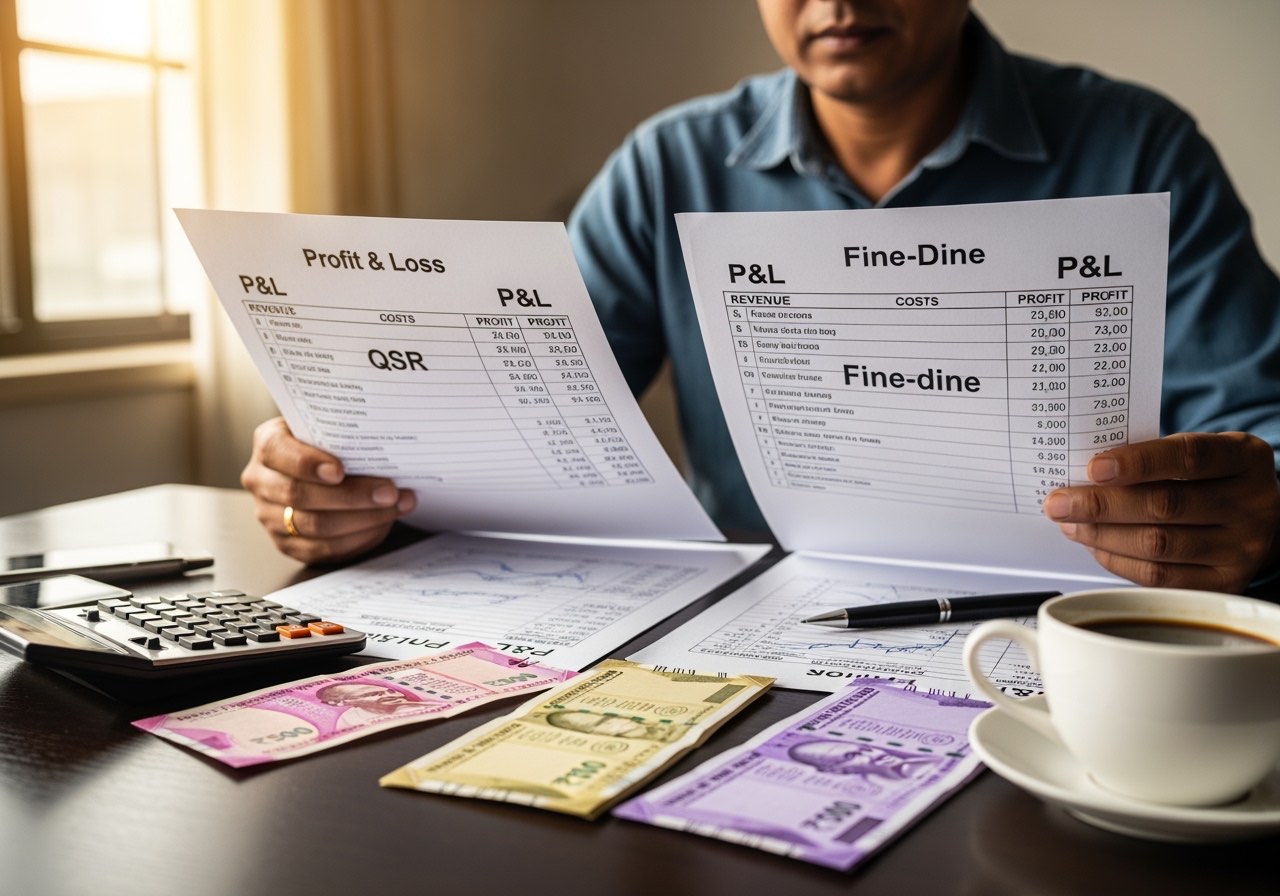
The headline P&L looks similar — both formats target 12–18% net margin in mature, well-run cases. The composition is very different:
| Cost line (% of revenue) | QSR | Fine-dine |
|---|---|---|
| Food cost | 30–35% | 28–32% |
| Beverage cost (where applicable) | 8–12% (largely soft drinks) | 18–22% (alcohol-heavy) |
| Labour | 14–18% | 22–28% |
| Rent | 8–12% | 12–18% (premium location) |
| Utilities | 4–6% | 5–8% (HVAC + lighting heavier) |
| Marketing + delivery commission | 8–14% | 3–6% |
| Other (R&M, supplies, etc.) | 5–8% | 6–9% |
| Net margin | 12–18% | 8–15% |
QSR margin lever  =   throughput × ticket × (1 − food%)  −  fixed labour & rent
Fine-dine lever  =   per-cover spend × table turn  −  high labour & high inventory carry
Same final number, opposite levers. A QSR succeeds by adding covers; a fine-dine succeeds by adding ₹s per cover. Strategy gets confused if you don't know which lever you're pulling.
The daily ops loop — different cadences
A QSR's daily ops loop is transaction-dense:
- Imprest float (small)
- Daily cash close (5 min)
- Daily wastage on top movers
- Daily aggregator reconciliation if delivery is meaningful
- Weekly inventory cycle count
A fine-dine's daily ops loop is inventory-dense:
- Imprest float (often larger to handle bar petty)
- Daily cash close (10 min, more denominations including foreign currency at hotel-attached)
- Daily premium SKU count (wines, single malts, specialty proteins)
- Daily reservation pacing review for next 48h
- Weekly menu engineering review
Same toolkit (DSR, PCV, imprest float, wastage log) — different weights on each tool. The DSR template works for both; the daily SKU count for fine-dine premiums is a separate routine on top.
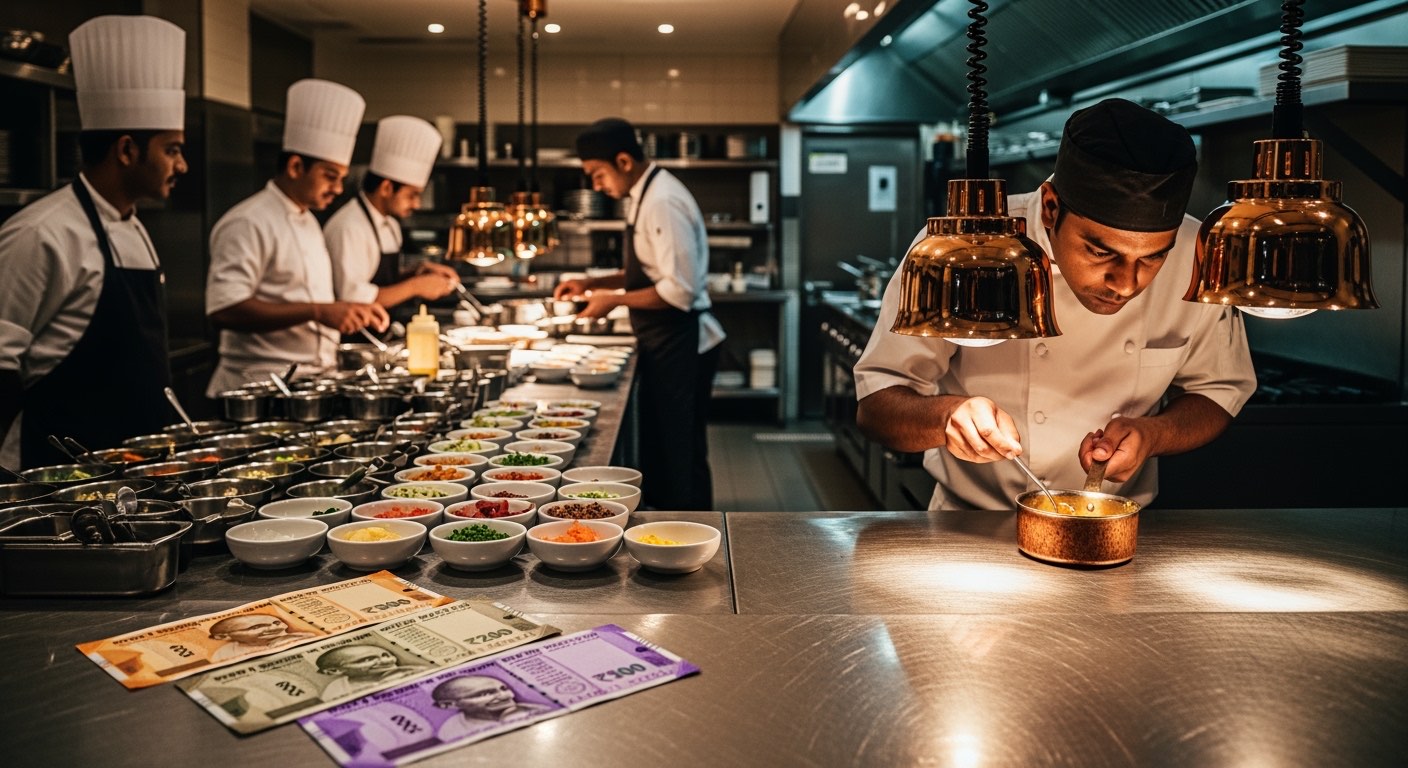
Three operational rules that work across both
Despite the differences, three rules are universal:
1. Imprest float discipline
Both formats need a fixed working float at the till and rigid PCV-against-voucher top-up. Float size differs (₹2,500 QSR, ₹6,000 fine-dine bar) but the rule is identical. (Detail in the imprest float piece.)
2. Daily cash close
Both formats die slow deaths to cash leakage. The DSR sheet is the same — fine-dine just has more rows (foreign currency, high-value tip pool).
3. Daily wastage log
Different SKU mix; same discipline. QSR — buns, frozen patties, dressings. Fine-dine — herbs, fish, opened wine bottles.
Three rules that don't carry over
1. Menu engineering cadence
QSR menu changes quarterly; minor item-level price changes monthly. Fine-dine menu changes seasonally (4× a year, full re-engineer); within season, only specials rotate weekly.
2. Reservation discipline
QSR doesn't take reservations (mostly). Fine-dine without disciplined reservation pacing throws away revenue — fully booked but with 40-minute gaps between seatings = lost covers.
3. Wine/bar inventory
QSR doesn't usually have a bar. Fine-dine bar inventory is the single most-controllable margin lever and needs the BCM discipline (detail in the bar liquor stock piece).
What to do this week
If you operate one format and are considering the other: shadow a counterpart for two full days. Don't rely on the menu and decor. Watch the kitchen prep window, watch the front-of-house choreography, watch the close-of-day count. The differences will hit you faster than any spreadsheet study. Most carry-over mistakes happen because operators reason from format-A patterns onto format-B problems.
Related on Restaurant Daily
One operator playbook a week, in your inbox.
Cash close, petty cash, payroll, compliance, unit economics — sent every Monday morning. No spam, no upsell drip. Unsubscribe in one click.
Sent from noreply@restaurantdaily.ai. We never share your address.
Related reading
Tier-2 Indian city restaurant daily ops — what changes vs metro (staffing, supply, margins)
Tier-2 Indian city restaurant daily ops vs metro — what changes in staffing, supply chain reliability, ticket size, and margins. Operator-grade comparison and adjustments.
Cafe daily ops checklist (India) — opening, mid-day, closing rituals for a 30-seater
A cafe daily ops checklist for a 30-seater Indian cafe — espresso prep, milk pars, opening/mid-day/closing rituals, and the four leakage points specific to cafes.
Burger Singh franchise cost in India — operator-side breakdown
Burger Singh franchise cost in India — publicly available capex, royalty, royalty and payback numbers explained from an operator's side, with honest caveats.
Dukaan vs Petpooja menu app for restaurants — direct ordering vs full POS
Honest comparison of Dukaan and Petpooja for Indian restaurants — direct WhatsApp/web ordering vs full POS, when each makes sense, and how some operators use both.
Razorpay POS vs Paytm POS for restaurants — MDR, settlements, hardware
Razorpay POS vs Paytm POS for Indian restaurants — MDR rates, settlement cycles, hardware, dispute handling, and which payment terminal fits which outlet shape.