Cafes and bakeries
Small tickets. One count.
Two hundred sales a day and a drawer of coins still has to balance at six.
Volume
Coins hide the gap.
A shortfall spread across hundreds of small sales never looks like a shortfall. Counting the drawer by denomination is what makes it visible.
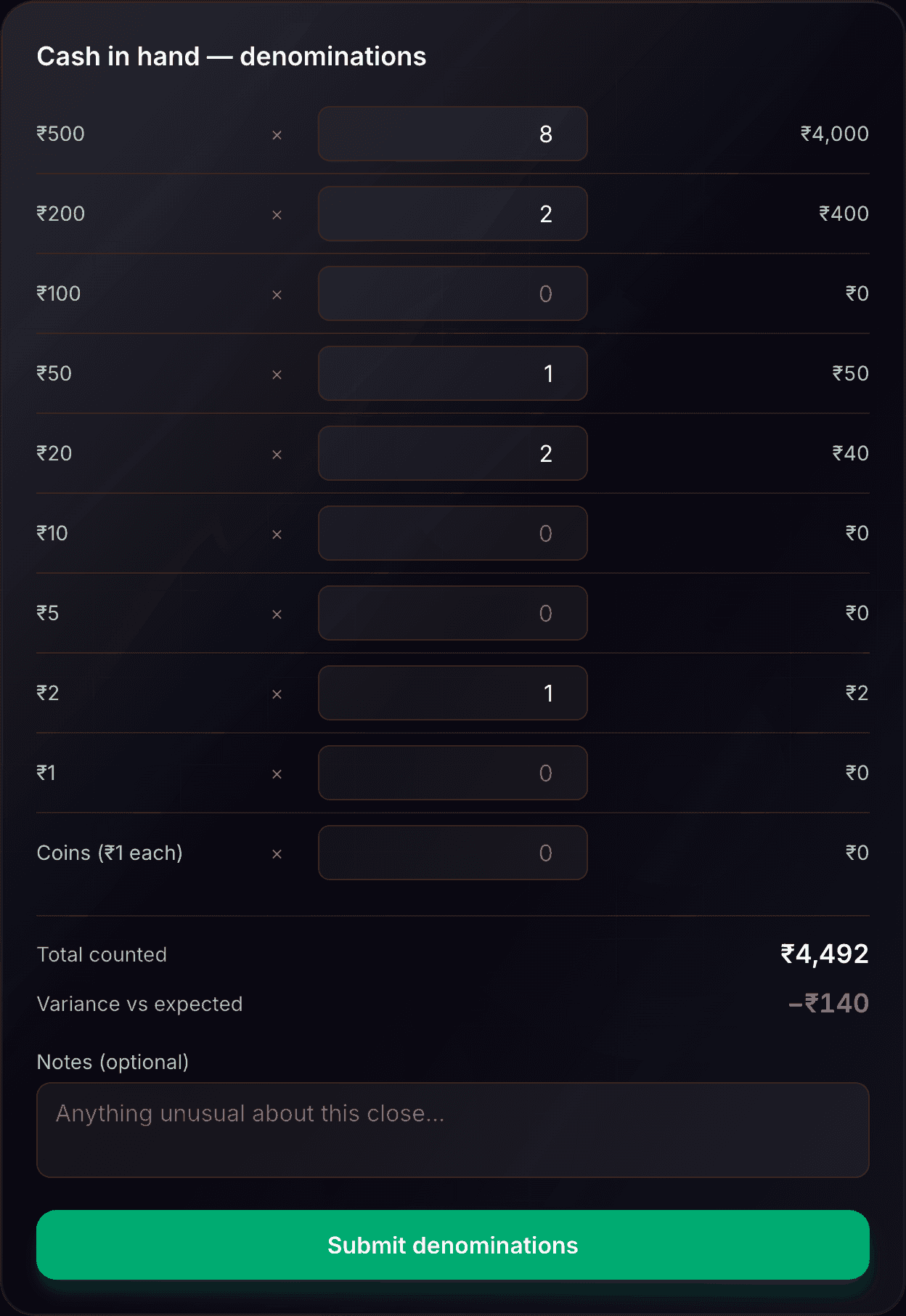
Count the cash. Once.
The same product, honestly.
Restaurant Daily is not built for one kind of kitchen. A counter closes its day the way a dining room does.*
* There is no cafe-specific module. What follows is the product every restaurant gets, and why it suits a counter.
The drawer is counted by denomination, down to the one-rupee coin.*

* Opening float, closing count, and the difference between them, tied to the person who counted it.
Part-time hours come off the shift that was worked, not off memory.*
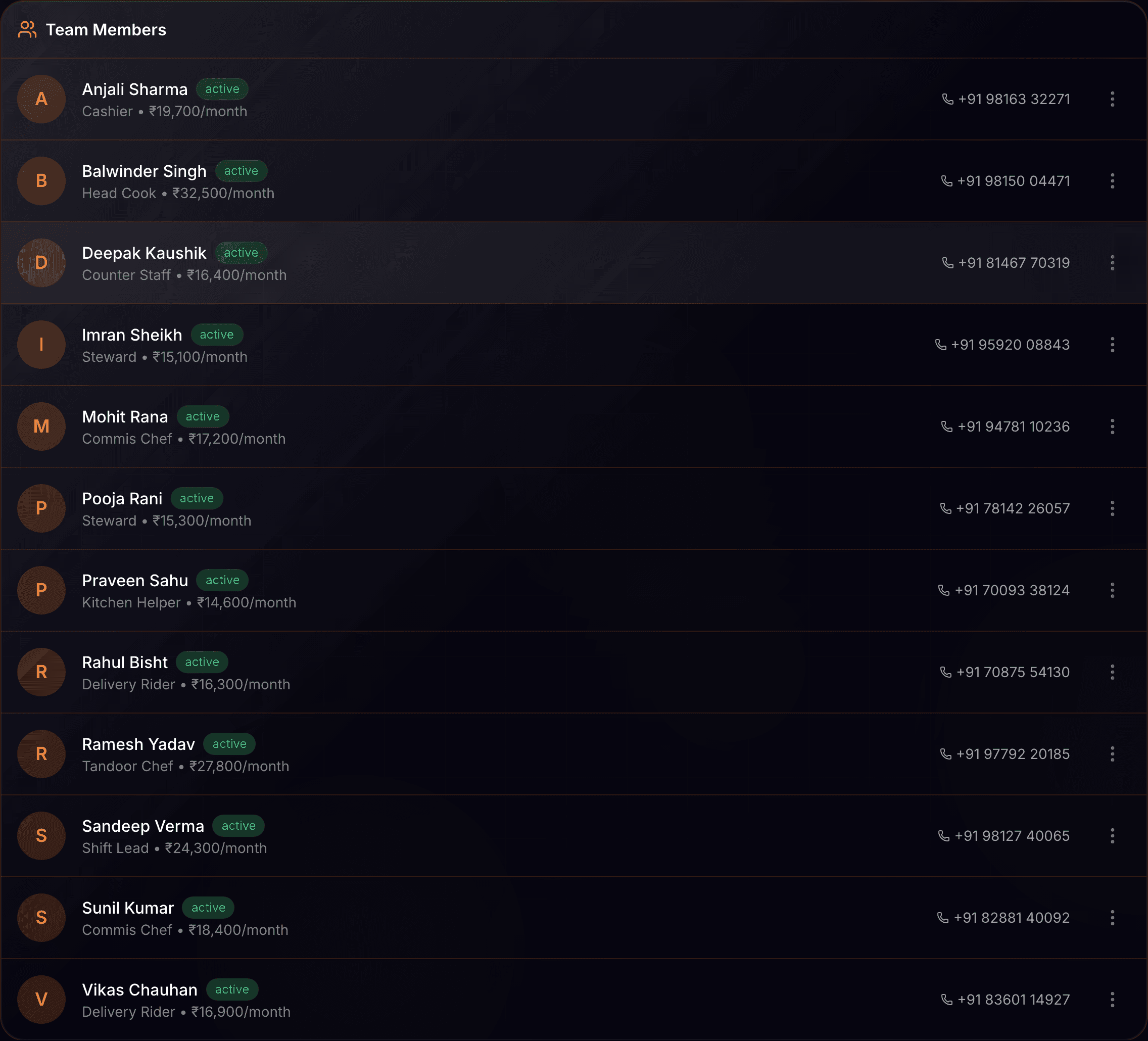
* Attendance is taken at the counter and feeds the salary sheet, with advances and deductions on the same page.
Milk, flour and the daily bread run are petty-cash vouchers with a category on them.*
* The small purchases that eat a counter’s margin end up on the same sheet as everything else, with a reason against each one.
The day closes once, and the owner reads it from a phone.*
* One record per outlet per day: opening balance, sales, banking, vouchers, and the variance with its reason.
Wastage
Not in the product.
Bakery wastage is tracked on paper or in the free template. Restaurant Daily does not log it, and this page is not going to pretend it does.
Questions? Answers.
Is there anything cafe-specific in the product?
No. The daily close, cash sessions, attendance and payroll are the same for every restaurant. What suits a counter is that they work at volume and on a phone.
Does it track wastage or unsold stock?
No. There is no wastage log and no stock count in the product. The wastage template on this site is a free browser tool.
Does it cost recipes or price the menu?
No. Recipe costing and menu pricing are free calculators here, not part of the product.
We take mostly UPI. Is a cash close still worth it?
The close records the day, not only the cash: opening balance, sales, banking and the money paid out of the drawer. The cash count is the part that catches a gap.
Can one login cover three counters?
Not today. A login belongs to one outlet, so each counter closes its own day under its own account. Transfers between outlets are recorded on both sides.
What does a part-time barista see?
Their own shift: opening the drawer, closing it with a count, and logging what was paid out of it. Salary figures and settings sit above that.